
In custom apparel sourcing, claims like "100% eco-friendly" or "recycled streetwear" are easy to print in a supplier catalog. However, an attractive marketing term does not equal verified raw material origin, chain-of-custody tracking, or FTC regulatory compliance.
For streetwear brands and private-label buyers sourcing custom hoodies, sweatpants, and T-shirts, relying on unverified claims creates severe greenwashing and legal risks. Here is a practical framework to audit factory claims, verify certifications against production batches, and back your product specs with authentic evidence.
Deconstruct the Statement: Broad Buzzwords vs. Specific Garment Scope
The primary pitfall in eco-friendly apparel sourcing is treating broad claims as all-encompassing guarantees. In garment manufacturing, a sustainability claim rarely applies to an entire finished piece unless every thread, dye bath, and trim component has been independently certified.
When reviewing supplier proposals, break the product down into individual components:
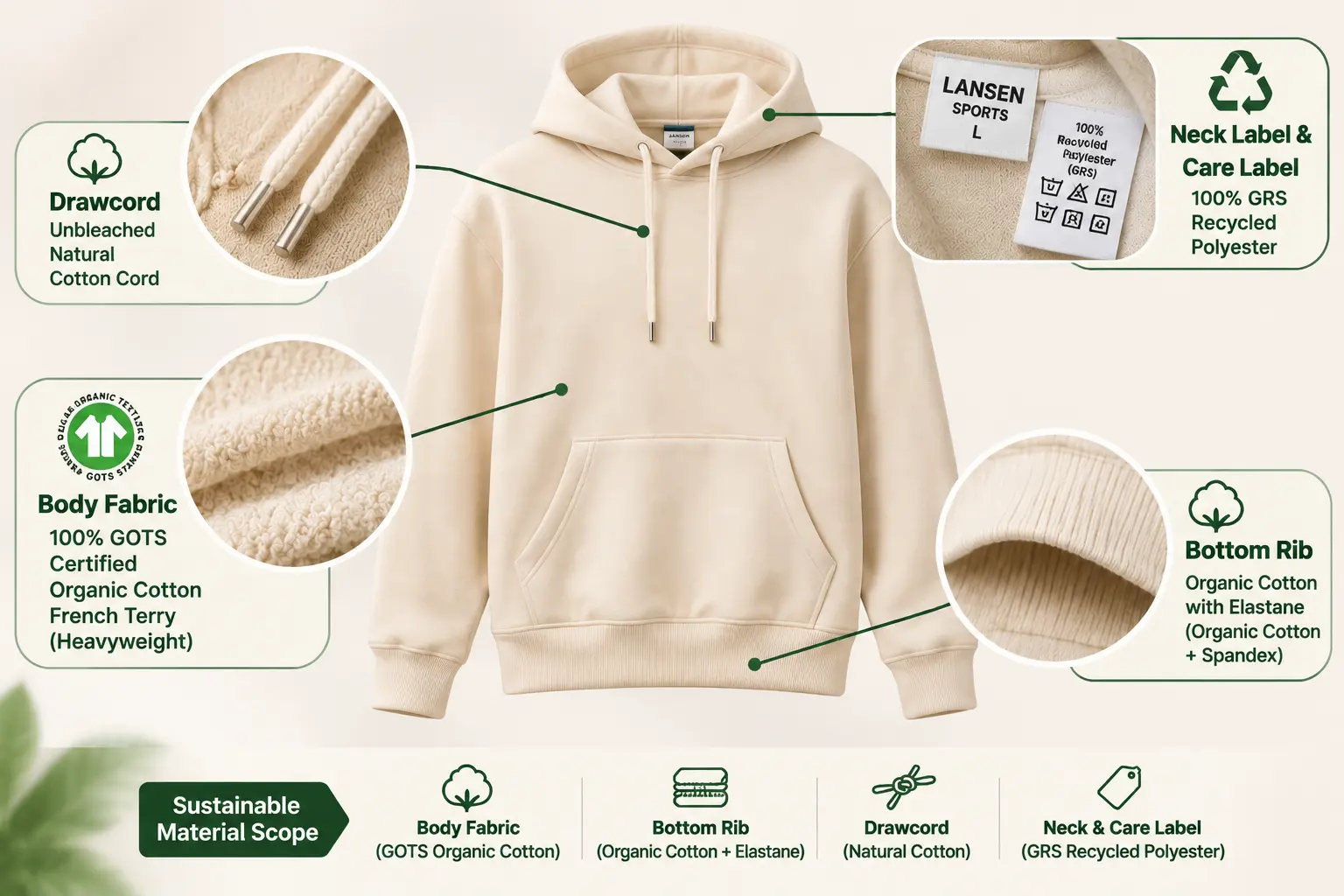
Shell Fabric: Is the fleece or jersey knit from 100% certified organic cotton, recycled polyester, or a blended composition where only a percentage meets eco-criteria?
Ribbing & Elasticity: Does the 2x2 ribbing on the cuffs and hem use virgin elastane/spandex, or is it paired with recycled synthetic fibers?
Trims & Accessories: Are the drawstrings unbleached natural cotton? Are the metal eyelets and aglets made from recycled brass or zinc?
Dyes & Chemical Finishing: Has the fabric undergone certified non-toxic reactive dyeing, or does it merely utilize conventional dyes with standard pre-washes?
Packaging & Branding: Are the woven neck labels, hangtags, and individual protective polybags made from certified post-consumer recycled (PCR) materials or compostable cornstarch blends?
Before incorporating environmental language into your brand’s customer-facing copy, isolate each component. Utilize our structured apparel product brief checklist to clearly specify your targeted material composition and certifications before requesting fabric swatches.
Match the Evidence to the Specific Production Batch
A factory showing an eco-certificate does not automatically mean your custom order is certified. One of the most common oversights in apparel procurement is confusing a general mill certification with a batch-specific transaction record.
To verify sustainability claims with authentic evidence, request two distinct levels of documentation:
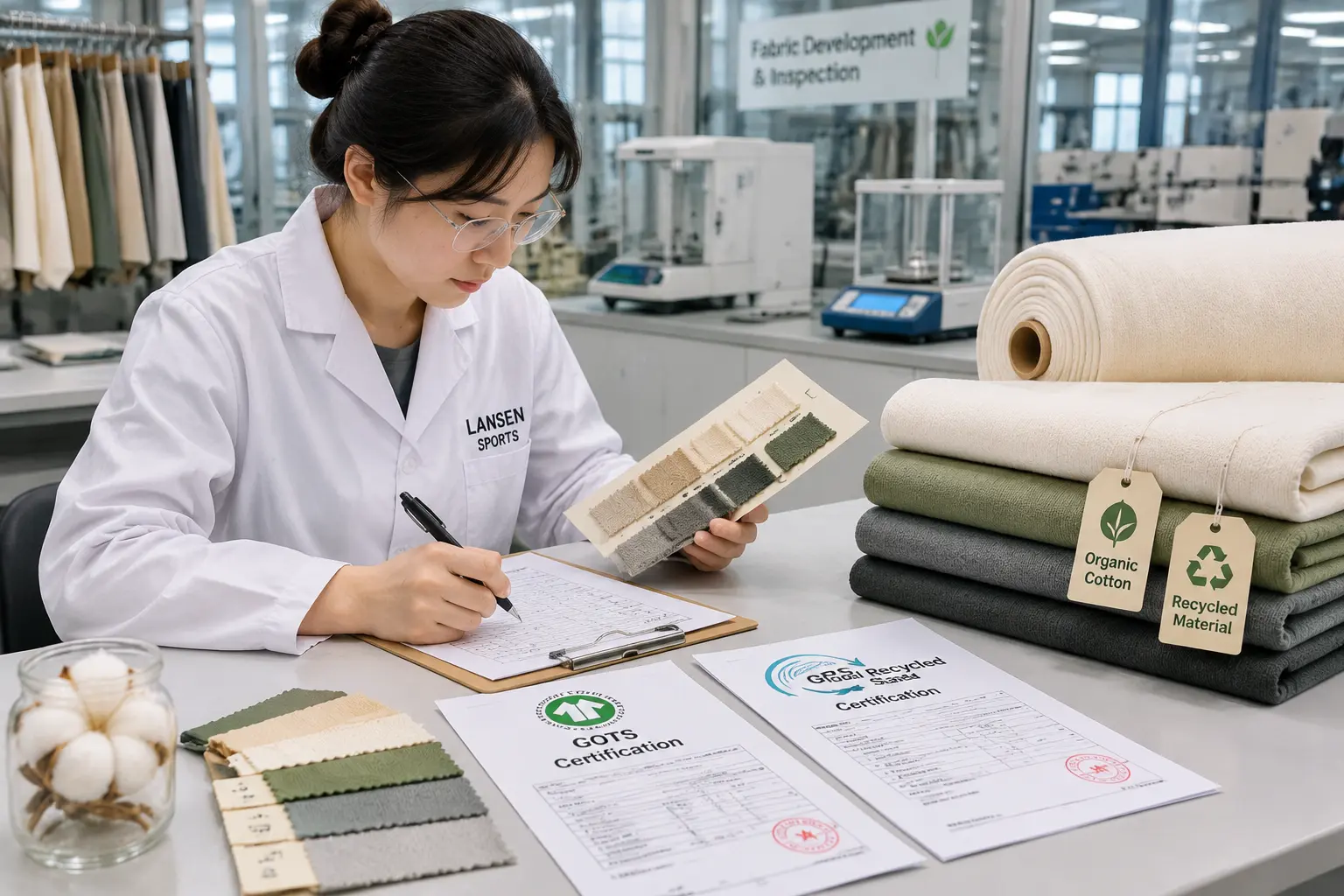
Scope Certificate (SC): Issued by third-party certifiers (such as Control Union or Intertek) confirming that a spinning mill, knitting facility, or dye house possesses the technical capability and management systems to process certified organic (GOTS) or recycled (GRS) goods. An SC confirms the facility is qualified, but it does not prove your specific yardage was processed under those standards.
Transaction Certificate (TC): The critical chain-of-custody document. A TC tracks the exact shipment of raw fiber from the yarn supplier to the fabric mill, and ultimately to the cut-and-sew facility. It lists the precise buyer, seller, invoice number, fabric weight, and lot numbers tied directly to your production run.
If an apparel manufacturer provides an expired certificate, a document registered under an unrelated corporate entity, or refuses to issue a lot-specific Transaction Certificate upon bulk fabric arrival, treat the claim as unverified.
Separate Development Intent from Commercial Verification
Sourcing sustainable textiles requires navigating progressive milestones. Conflating an early design target with a final production fact creates severe inventory and compliance issues:
Development Objective (Concept Stage): During line planning, your brief might state: "Targeting 400+ GSM 100% organic cotton French Terry with eco-reactive dyeing." At this stage, it is an exploratory target. Do not publish sustainability claims on your pre-order pages.
Proto Sampling & Lab Dip Phase (Testing Stage): The factory provides fabric hand-feel swatches and lab dips. Because development sample yardage is often cut from sample-room stock, physical samples may not carry an individual TC. Treat sample-stage performance as a mechanical fit and aesthetic test rather than bulk environmental verification.
Commercial Bulk Execution (Fulfillment Stage): Once your bulk purchase order is placed and custom knitting begins, the designated raw fiber lot is assigned. Only after bulk inspection, yarn lot validation, and export clearance should the finished garment be marketed with verified sustainability claims.
Understanding complete factory capabilities prevents misunderstandings. Learn how our OEM & ODM apparel development services integrate end-to-end supply chain transparency, from traceable raw yarn sourcing to pre-shipment quality control.
Audit Your Public Marketing Copy Against Real Chain-of-Custody
For apparel brands selling in the United States and European Union, regulatory bodies like the Federal Trade Commission (FTC Green Guides) actively penalize misleading environmental marketing.
To maintain legal compliance and build lasting customer trust, establish an internal Claim Register before publishing product descriptions:
Audit Wording Precision: If your custom hoodie uses an 80% organic cotton and 20% recycled polyester fleece blend, your product page must state the exact blend ratio. Never market it under a blanket headline like "100% Organic Hoodie."
Verify Logo Usage Rights: Displaying official logos (such as the GOTS or GRS emblem) on your private neck labels or packaging requires your brand or manufacturing partner to hold proper licensing and certification contracts. When using certified fabrics without direct brand licensing, describe the material inputs accurately without misusing registered trademarks.
Archive Supporting Records: Store digital copies of your factory’s Scope Certificates, lab testing results, and order-specific Transaction Certificates alongside your approved tech pack version for audit readiness.
Real-World Sourcing Scenario: The Recycled Polyester & Organic Cotton Trap
Consider a common scenario in streetwear production: a brand decides to develop an eco-conscious collection featuring heavy pullovers and matching joggers, reviewing hoodies and sweatshirts alongside sweatpants and joggers.
During development, the supplier suggests an open-market blended fleece containing 30% recycled polyester to meet a lower price target:
The Sourcing Reality: While the fabric contains recycled fiber, open-market stocks frequently lack transaction-level provenance. The mill may not have preserved the chain-of-custody paper trail required to verify whether the polyester derived from certified post-consumer PET bottles (rPET) or post-industrial scrap.
The Operational Fix: If verifiable environmental claims are non-negotiable for your brand positioning, opt for custom-knitted yardage where certified yarn is purchased directly under a reserved lot number. This guarantees you receive a verifiable Transaction Certificate for your bulk run.
Frequently Asked Questions (FAQ)
What is the most critical document needed to prove an apparel sustainability claim?
The Transaction Certificate (TC) is the definitive proof of chain-of-custody. While a Scope Certificate (SC) confirms a factory or mill is accredited, only a TC verifies that the exact fabric weight and yarn lots purchased for your specific purchase order were tracked and certified from origin to finished production.
Can our brand print official GOTS or GRS logos directly on private neck labels?
Only if your brand holds a certified entity agreement or your contract manufacturer is certified through all production stages (spinning, knitting, dyeing, cutting, sewing, and packing) under an authorized sub-license. Without formal chain certification, you can state: "Crafted from GOTS-certified organic cotton yarns" in product descriptions, but you cannot legally imprint the standalone certification trademark logo.
Does choosing organic cotton or recycled polyester require higher MOQs?
Custom knitting and dyeing eco-friendly fabrics typically requires meeting yarn minimums (often starting around 300 to 500 kg per dye lot). However, working with a flexible manufacturing partner that maintains established relationships with certified knitting mills allows emerging brands to develop custom eco-lines starting at competitive, low-MOQ thresholds.
Are eco-friendly reactive dyes as colorfast as conventional chemical dyes?
Yes. Modern certified low-impact reactive dyes chemically bond directly with natural cotton fibers. When processed correctly through proper scouring, dyeing, and washing stages, they achieve high colorfastness ratings (Grade 4.0+) across repeated laundering, light exposure, and rubbing tests.
Ready to Build a Verified Sustainable Apparel Line?
Stop second-guessing supplier certificates and buzzwords. Partner with an engineering-driven apparel manufacturer dedicated to certified material integrity, transparent production tracking, and verified craftsmanship.
Tech Pack & Fiber Consultation: Our textile specialists evaluate your custom designs, recommending certified organic cotton, recycled fleece, and eco-friendly trim alternatives that match your target hand-feel and durability.
True One-Stop Manufacturing: From certified yarn sourcing and custom reactive dyeing to precision cutting, sewing, pre-shipment quality control, and DDP delivery.
Custom Product Specialization: Explore our end-to-end OEM/ODM production across custom hoodies, fleece sweatpants, and premium tees.
👉 Submit Your Garment Brief or Request Certified Fabric Swatches
Visiting China for the Canton Fair Recently? Let’s Connect in Person!
If you are currently traveling in China or recently attending the Canton Fair, we welcome the opportunity to meet your sourcing team face-to-face:
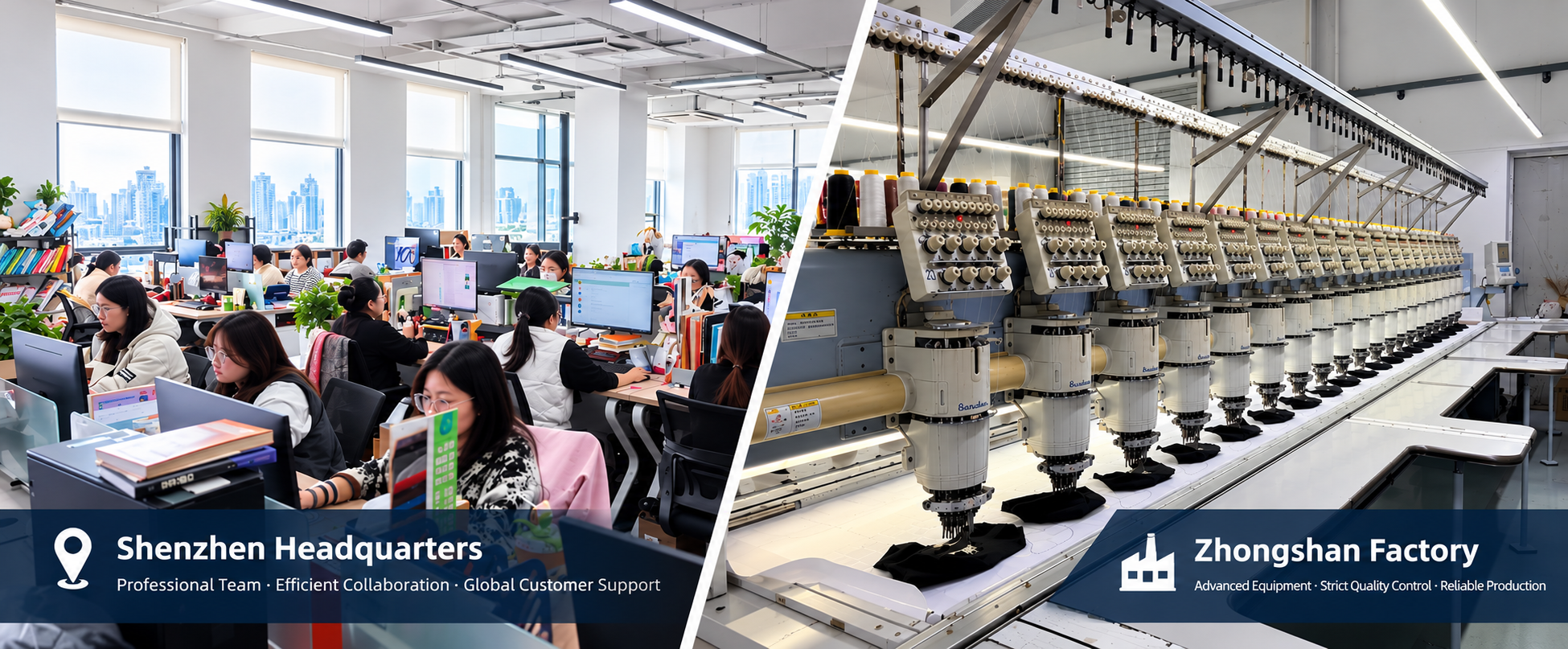
Executive Strategy Sessions: Visit our corporate headquarters in Shenzhen to inspect our certified fabric libraries, review custom tech packs, and plan seasonal production timelines.
Direct Factory Tours: Tour our primary manufacturing facility in Zhongshan to inspect our automated cutting equipment, knitting and sewing lines, specialized print facilities, and internal quality testing stations firsthand.
👉 Book a Meeting or Schedule a Factory Tour with Our Specialists