Use the Project Purpose to Frame the Material Discussion
A material discussion is far more effective when it starts with the core project question rather than an isolated list of fabric names or swatches. Before diving into GSM (grams per square meter) or specific yarn counts, state clearly what your team is trying to establish:
Who is the intended wearer?
What is the setting or climate in which the garment will be worn?
What is the visual direction under review?
What specific question should the first prototype help answer?
This context gives participants a shared objective without implying that a final material has already been locked in.
At this early stage, document what is known while keeping unknowns clearly visible. Your team might have a reference image, a preferred surface texture, or a specific hand-feel expectation. While these inputs guide the discussion, they do not automatically dictate fiber composition, laboratory performance testing, or commercial suitability. Starting with purpose helps you ask sharper questions and prevents an exploratory concept from being mistaken for a finished tech pack specification.
Separate Observations from Claims That Need Verification
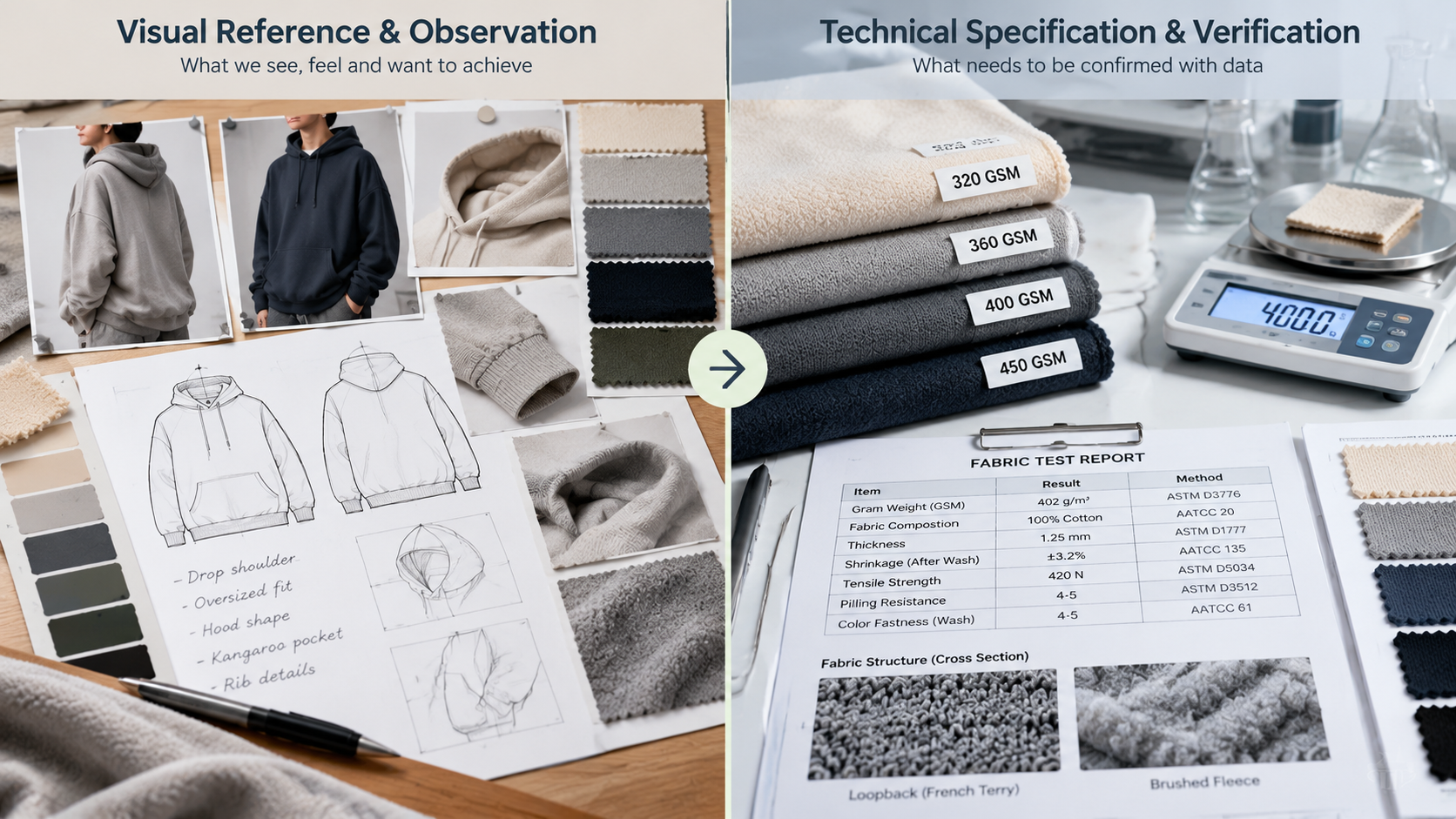
When reviewing reference materials, record your observations in precise language that reflects what can actually be seen or felt. For example, note that a reference sample appears to have a certain surface finish, weight impression, or drape. Avoid converting immediate visual impressions into unverified claims regarding fiber content, breathability, shrinkage rates, or technical performance.
Observations: Surface texture, visual drape, aesthetic direction, color tone.
Claims Requiring Verification: Exact GSM weight, fiber composition percentages, eco-certifications, tensile strength test records.
By separating these elements, your project review stays organized. You can reference our existing product brief guidance to record observations, open questions, and confirmation items separately. Participants can discuss the desired creative direction today while keeping a clear checklist of details that require technical confirmation before mass production.
Ask Questions That Lead to a Practical Next Decision
A concise question set should drive your next review session toward a productive, actionable decision. Instead of collecting every possible technical term, focus on asking questions that move your project from a broad preference to a definitive development step:
What needs to be clarified regarding the garment's look, hand-feel, structure, and fit interaction?
What technical specifications are required to evaluate these points responsibly?
Keep your questions conditional when answers are still unconfirmed. For example, ask what parameters should be verified before committing to a fleece weight or knit structure, rather than assuming it fits your exact target market. Avoid binding open questions to premature cost estimates, rigid production timelines, or unverified performance guarantees. That boundary allows creative and engineering teams to collaborate smoothly without creating unrealistic expectations.
Make References Useful and Permission-Aware
Physical swatches, mood board photographs, product reference pages, and design sketches are invaluable tools for explaining a material idea, provided their role is understood.
Add a brief note to every reference explaining precisely what it illustrates (e.g., “Reference texture comparison for heavy cotton hoodie fleece”).
Do not treat third-party images or online snapshots as formal proof of a proprietary specification or reproducible manufacturing outcome.
Before sharing reference materials externally, ensure they are appropriate for supplier communication. If permission or origin is unclear, describe the characteristic in clear descriptive text and keep the image out of the formal review pack. This keeps conversations focused on your brand's unique goals while respecting proper material boundaries.
End the Review with a Short Record of What Happens Next
Conclude your project review by summarizing the outcomes into three distinct categories:
The next question to explore (e.g., verifying 400 GSM heavy cotton loopback fleece vs. brushed fleece).
The shareable context (approved reference images and design briefs).
Items requiring technical or commercial confirmation (lab dips, custom dyeing, or MOQ verification).
If you are currently preparing a sampling and manufacturing conversation, our services overview page can help frame your project discussion. Bring a focused brief, ask for clear next steps, and let our engineering team handle the heavy lifting.
Frequently Asked Questions (FAQ)
Q1: Why is defining GSM (grams per square meter) important in custom hoodie development?
A: GSM determines the weight, warmth, and structural drape of your garment. For example, standard hoodies usually range from 300 to 350 GSM, while heavyweight streetwear hoodies often utilize 400 to 500 GSM. Defining this early prevents misunderstandings between lightweight fashion wear and premium heavyweight apparel.
Q2: How do I share reference swatches with my OEM apparel manufacturer securely?
A: You can digitize your physical swatches using high-resolution macro photography with a color calibration card, or mail physical fabric cuttings directly to our sample room for precise lab analysis and yarn matching.
Q3: What is the typical timeline from material discussion to first sample approval?
A: Once your material questions, tech pack, and target specifications are finalized, our standard prototyping and sample development phase typically takes 7 to 12 business days depending on custom dyeing or specialty finishing requirements.
Q4: Can Lansen Sports help source custom fabrics based on my tech pack?
A: Yes. As a comprehensive one-stop OEM/ODM partner, our sourcing team matches your design requirements with vetted global textile mills, providing certified fabric options, custom lab dips, and pre-production samples.
Next Step for Your Project
If you have a clear project purpose, shareable reference context, and a focused list of material questions, you are ready to start building. Keep unverified specifications and commercial terms marked for separate confirmation so your development process stays streamlined and efficient.
Discuss your project.
Have an apparel idea?
Share what is decided and what still needs discussion. Our team can review your project brief.
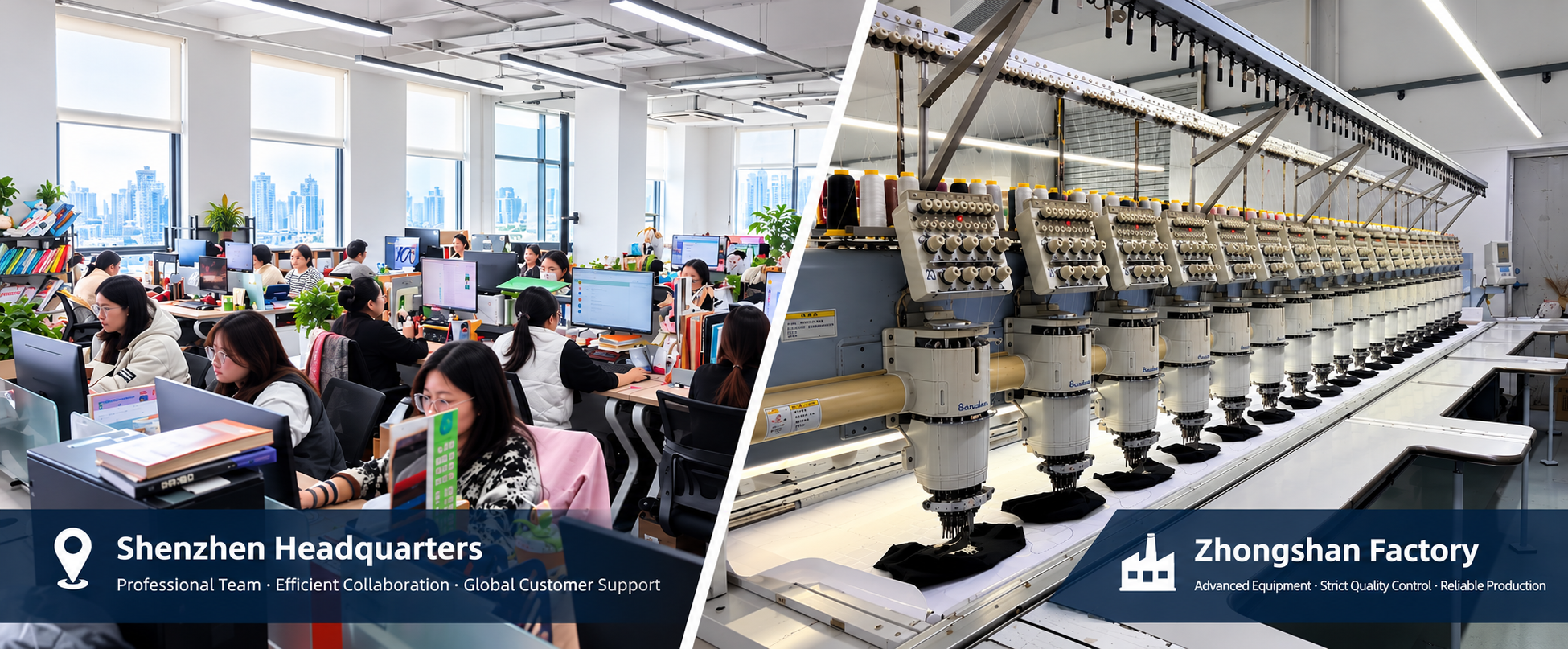
Planning to attend the upcoming Canton Fair? We would love to meet you in person! Our sales headquarters is located in Shenzhen, and our direct manufacturing factory is based in Zhongshan.