
Define What the Measurement Discussion Needs to Clarify
A measurement discussion is most useful when the team first states what it needs to clarify. The question may concern the intended overall proportion, a fit issue to observe in a first sample, a relationship between garment areas, or the information needed for a later decision. This is different from presenting a finished size specification. A clear purpose helps everyone understand why measurements are being discussed and prevents a list of numbers from appearing more final than the project information actually supports.
Start with the intended wearer, garment use, and the stage of the project. Then identify whether the review is about a broad direction, a point of fit, a comparison between references, or a specific unresolved question. If any of that context is unknown, mark it as open. An early discussion can still be productive when it distinguishes what the team is trying to learn from what has already been confirmed by the appropriate people and records.
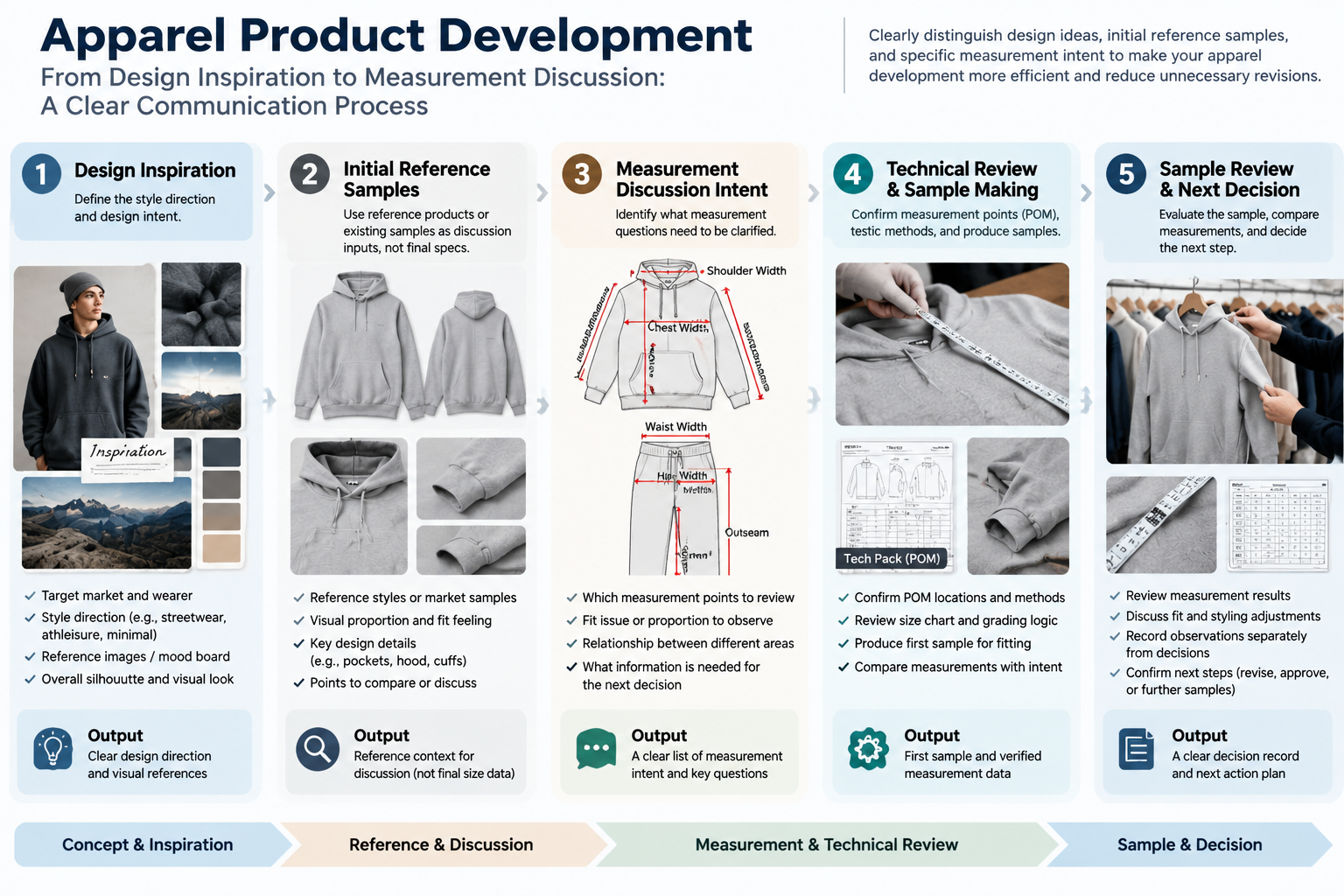
Treat References as Discussion Inputs, Not Final Size Data
Photos, sample images, size charts, and sketches can help explain a measurement question, but they do not automatically establish a final specification. An image may show a proportion the team wants to discuss, while a chart may indicate the kind of information a reviewer needs to compare. Add a short note explaining that limited purpose. Do not copy a reference into a project record as if it confirms dimensions, grading, tolerance, or a final fit outcome without a verified source and project-specific review.
The existing product brief guidance provides a practical place to separate reference context, known inputs, and questions still open. When a measurement point depends on an approved brief, a current technical record, or another responsible source, list it for confirmation. This keeps the conversation clear: the team can explain what it wants to examine without turning a visual impression or third-party reference into an unsupported product claim.
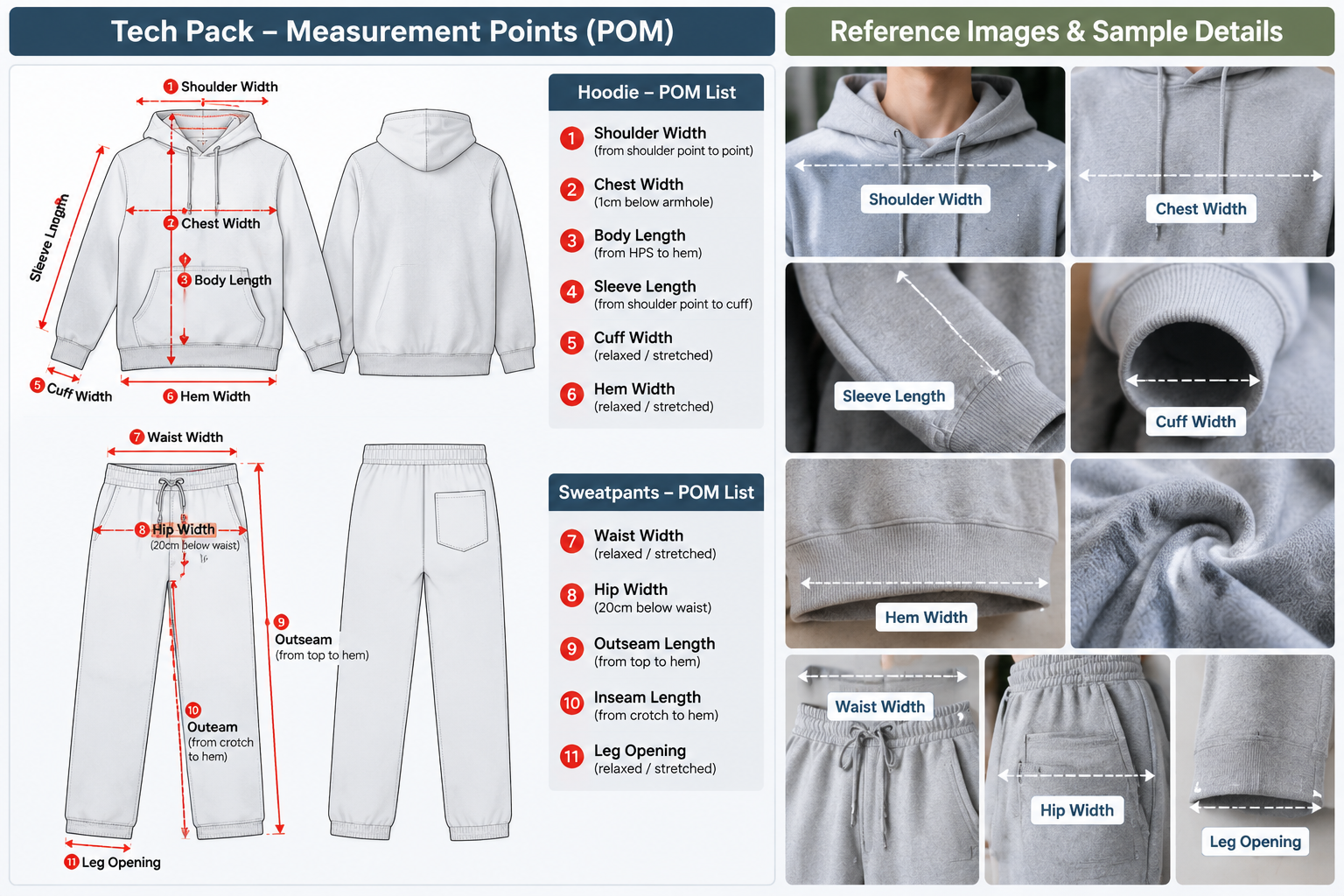
Ask Focused Questions Instead of Collecting Isolated Numbers
A strong review agenda asks what a measurement point should help the team decide. For example, a question might address the relationship between overall length and intended styling, where a fit observation should be made, or which area needs comparison in the next sample review. Group questions by the decision they support. That structure is more useful than a long, unexplained list because a later reviewer can see why each point matters and what information is still missing.
Keep language conditional whenever the answer is not approved. Avoid claiming that a garment will fit a certain way, meet a performance need, or follow a final grading rule. Do not attach commercial terms, timing, compliance statements, or manufacturing promises to an open measurement discussion. If the project needs those answers, record them as separate confirmation items. This preserves the value of early review without suggesting that design, technical, and commercial choices have already been settled.
Record Observations and Next Decisions Separately
During a review, keep observations separate from decisions. An observation may note a question about proportion, placement, or a point to compare next time. A decision should state only what the responsible participants have actually agreed to explore or confirm. If the team needs more information, record that as an open item rather than filling the gap with a presumed number or outcome. This small separation makes the review easier to revisit when references, samples, or project direction change.
A short decision record can also show what needs to happen next: obtain a verified input, review a shareable reference, compare a future sample, or ask the appropriate person to confirm a commercial or technical point. The record does not need to make promises. Its job is to preserve context and give the next discussion a focused starting point. This is especially important when several people contribute notes at different stages of an apparel project.
Create a Concise Handoff for the Next Review
Before sharing the agenda, make a compact handoff with the project purpose, the measurement questions to discuss, the references that may be shared, and the items still needing confirmation. Ask for the next decision rather than a blanket assurance. A reader can then see the scope of the discussion and identify which questions need further evidence before they can become part of a technical or commercial record.
If you are organising a development and sampling conversation, the services overview can help frame the type of project discussion you want to begin. Bring the approved context you have, keep uncertainty visible, and use the review to clarify the next step. This approach helps a team make progress without treating a reference, an early note, or a preliminary sample observation as a final specification, product claim, or commercial commitment.
Frequently Asked Questions (FAQs)
Q1: What is a Point of Measurement (POM) in apparel manufacturing?
A Point of Measurement (POM) refers to specific locations on a garment (such as chest width, sleeve length, or pant inseam) where measurements must be taken. In B2B apparel production, having clear POM definitions in your tech pack ensures that the factory and your quality control team measure garments consistently.
Q2: How do I avoid sizing errors during custom hoodie and sweatpant sampling?
Always avoid relying solely on unverified visual reference samples or generic size charts. Clearly link your measurement points to an approved product brief, keep unconfirmed specs marked as open, and work closely with your OEM/ODM partner's technical team during the initial fit sessions.
Q3: Why should reference samples not be treated as final specs?
Reference samples often stretch, shrink, or reflect early design explorations. Treating them as absolute final data without verification can lead to systemic grading errors when scaling production across multiple sizes.
Next Steps: Partner with Lansen Sports
If you have a clear project purpose, shareable context, and focused measurement questions for your next apparel line, we are here to help turn your concepts into market-ready products. As an industry-leading OEM/ODM manufacturer specializing in custom hoodies, sweatpants, and activewear, Lansen Sports provides a seamless, one-stop solution from fabric sourcing and tech pack grading to final bulk production and global shipping.
Ready to start your next custom collection?
Discuss your project with our engineering team today.
P.S. Planning to attend the upcoming Canton Fair? We warmly invite you to meet our team in person! Our corporate headquarters is located in Shenzhen, and our direct source manufacturing factory is based in Zhongshan—let's discuss your custom apparel needs face-to-face.