
Begin with the construction question the review must answer
A construction discussion is easier to manage when it starts with the project decision it is meant to support. For apparel brands developing custom Hoodies or OEM/ODM collections, the team may need to understand how a visible detail relates to the intended garment direction, which area should be examined in a first sample, or what a later review needs to compare. State that purpose before listing details. It gives everyone a shared reason for the conversation and avoids making early notes look like a final technical instruction.
Add the project context that is already known, such as intended use, target wearer, style direction, or the role of the garment within a collection. Then mark what is still open. An early review can discuss visual structure, seam placement, finish questions, or the relationship between elements without claiming a final method, material performance, durability, certification, or completed outcome. Keeping the boundary visible lets the discussion move forward without creating unsupported product .
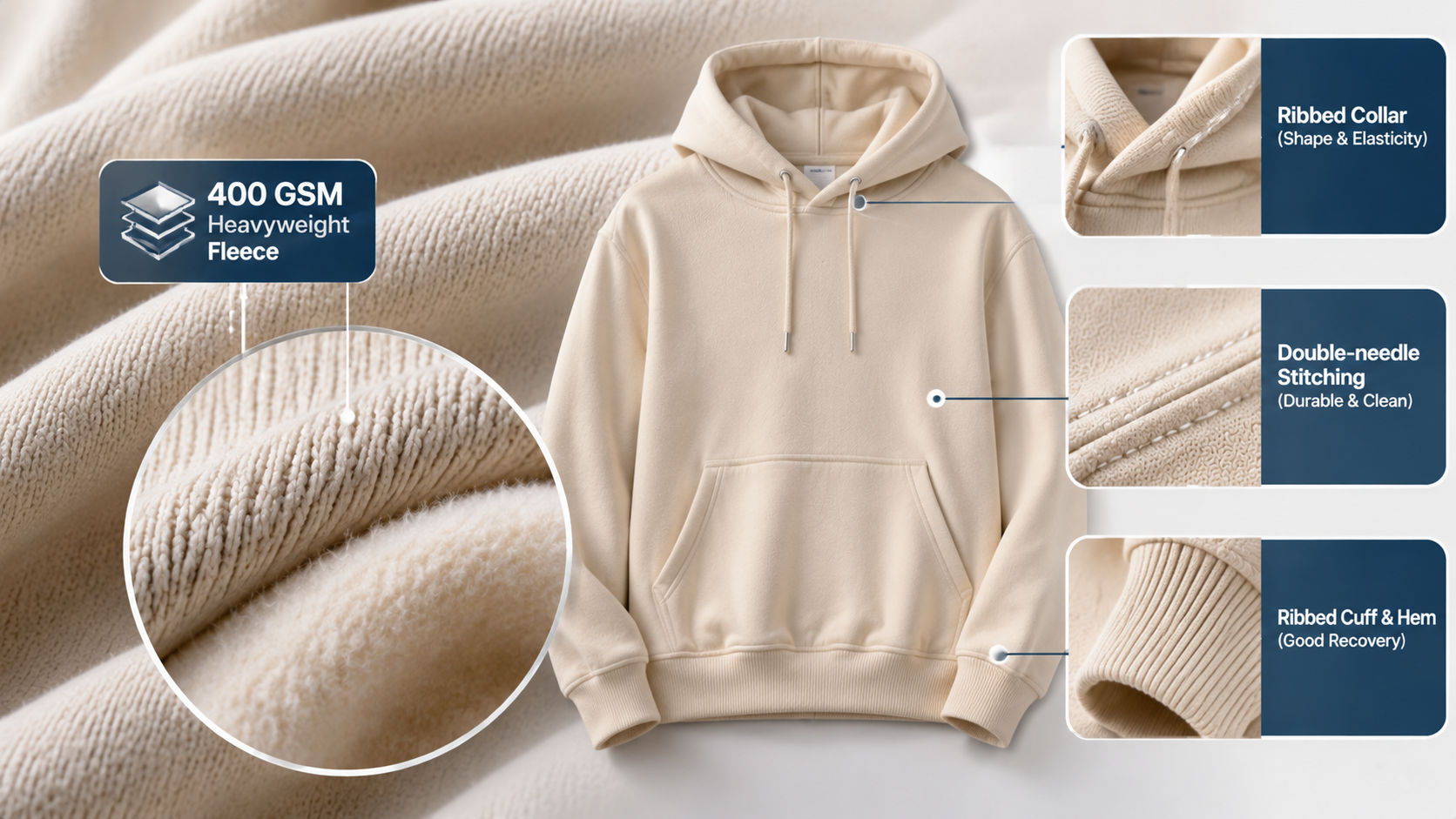
Use references to explain a question, not to prove a specification
A photo, sketch, sample image, or close-up can be useful when it explains the part of a garment the team wants to discuss. Include a note that says what the reference is illustrating: for example, an area of construction, a visual relationship, or a point for the next review. Do not treat a reference as proof of a final material, method, quality result, or commercial availability. Those claims need their own current and project-specific evidence.
The existing product brief guidance can help keep references, known context, and open questions in separate places. If a detail depends on an approved technical record, a rights-cleared asset, a test result, or a commercial source, list it as an item to confirm. This makes the reference useful while making its limits clear. It also helps a later reviewer see whether a note describes an observation, a question, or a verified input that can responsibly be carried forward.
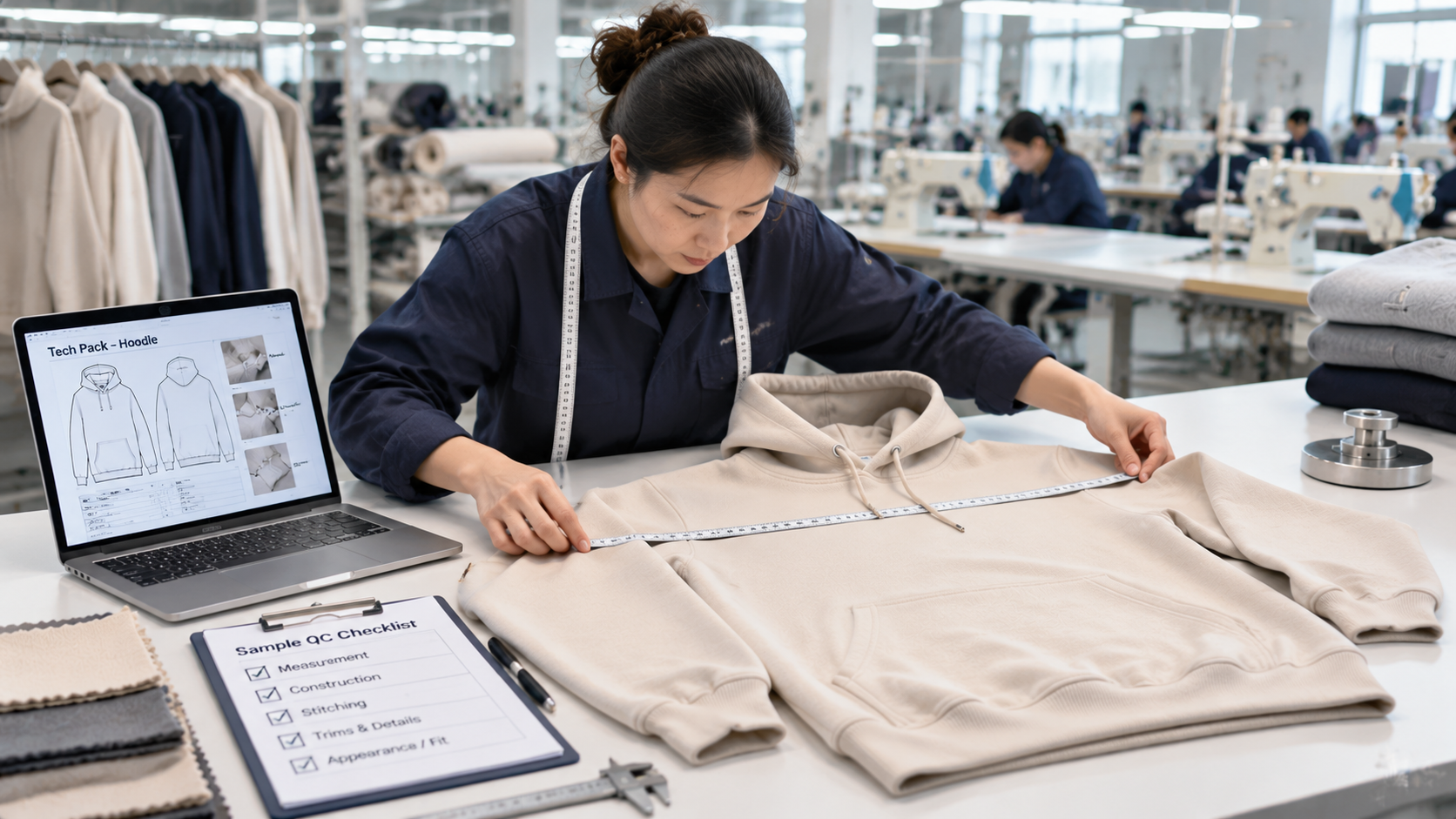
Use project context and focused questions to identify what the next construction review should clarify.
Ask questions that lead to a practical next decision
A useful agenda asks what a construction point should help the team decide. Questions can address what should be reviewed in the next sample, how a visible feature relates to the overall direction, or which information is needed before the group can choose between alternatives. Group each question with the decision it supports. This makes the discussion more useful than an unexplained inventory of terms because the next reviewer can understand why a point matters.
Use conditional language when the answer has not been approved. Do not state that a garment will achieve a particular performance level, use a certain method, or meet a final quality requirement unless the relevant evidence and decision exist. Do not add price, timing, capacity, certification, or delivery promises to a construction question. If those matters are important, keep them in a separate confirmation list for the people and sources responsible for providing current answers.
Record observations, choices, and confirmation items separately
During the review, separate what the group observes from what it decides. An observation can identify a detail to compare, a question about visual balance, or a point that needs clearer context. A decision should state only what the responsible participants have agreed to explore or verify next. If the answer is missing, record the gap rather than filling it with an assumed construction rule or outcome. This prevents an informal annotation from later being read as a final instruction.
A short record also makes handoffs easier. It can show which context may be shared, which questions remain open, and which items require technical, rights, or commercial confirmation. The record is not a substitute for a verified specification. Its value is that it preserves the purpose of the discussion and gives the next participant a clear starting point, even when several people contribute notes at different stages of a project.
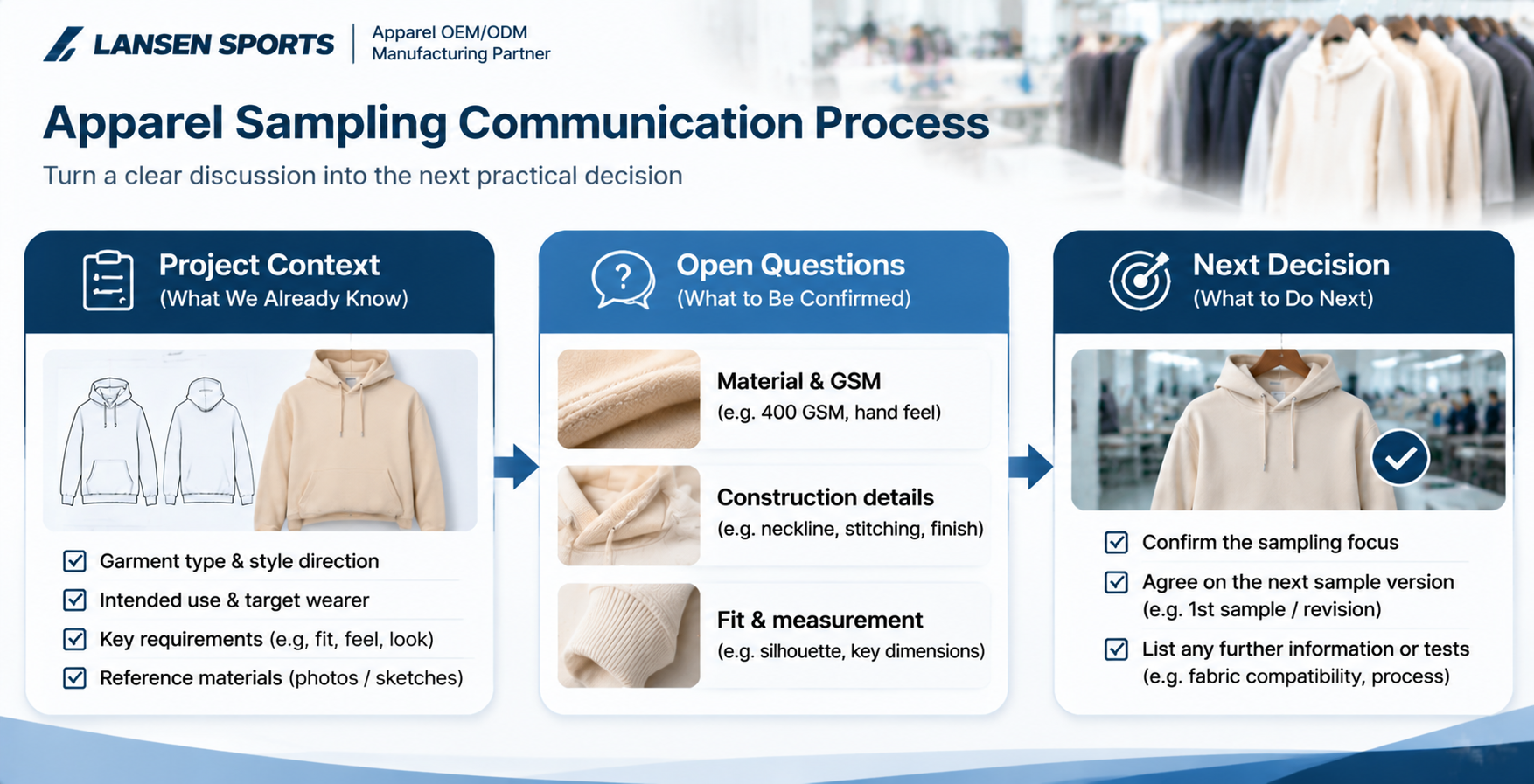
Separate observations, decisions, and confirmation items before the next apparel sample discussion.
Finish with a concise request for the next review
Before sharing the construction discussion, include the project purpose, the questions to be reviewed, the references that may be used, and the items still needing confirmation. Ask for the next decision rather than a blanket assurance. This lets the next participant respond to a defined project need while seeing exactly which details should not yet be treated as settled specifications or terms.
If you are organising a development and sampling conversation, our services overview can help frame the type of project discussion you want to begin. Bring only approved or shareable context, keep uncertainty visible, and use the review to clarify the next question. This approach supports practical collaboration without treating an early reference, observation, or sample discussion as a final construction specification or commercial commitment.
Next Step for Your Project
If you have a clear project purpose, shareable reference context, and focused construction questions, use that information to begin a practical discussion with Lansen Sports. Keep unverified specifications, rights questions, and commercial terms marked for separate confirmation before they become part of a project record.
Have an apparel idea?
Share what is decided and what still needs discussion. Our one-stop OEM/ODM team can review your project brief, from custom hoodies and tracksuits to full collection development, rapid 7-day sampling, and global shipping.
Ready to turn your design into reality?
Planning to attend the Canton Fair? We warmly welcome you to schedule a visit for an in-person discussion. Our global headquarters is located in Shenzhen, and our direct source manufacturing factory is based in Zhongshan. Let's build your next apparel collection together!