Give each decision log a clear purpose
An apparel development decision log is a short working record, not a substitute for a specification, quotation, or production agreement. Its purpose is to show what the team has actually decided, what is still open, and what should be checked before the next review.
Start with the project name or reference, the date of the review, and the core question the group was trying to answer. This gives later readers enough context to understand why a note exists without turning a meeting summary into a list of implied commitments.
A good first input is the existing product brief checklist. It identifies intended use, product direction, shareable references, known details, and questions for a first sample. Transfer only the context that is confirmed and relevant to the review. If a point is still being explored, label it as an open question. That simple distinction prevents a preference, sketch, or early comment from being treated as a final product requirement after it has been passed to someone new.
Write observations separately from decisions
During an OEM/ODM review, many comments begin as observations: a team member may want to look again at proportion, placement, the relationship to the intended use, or an aspect of the material discussion. Record the observation in plain language first. Then add a separate decision field only if the responsible people have agreed on an action.
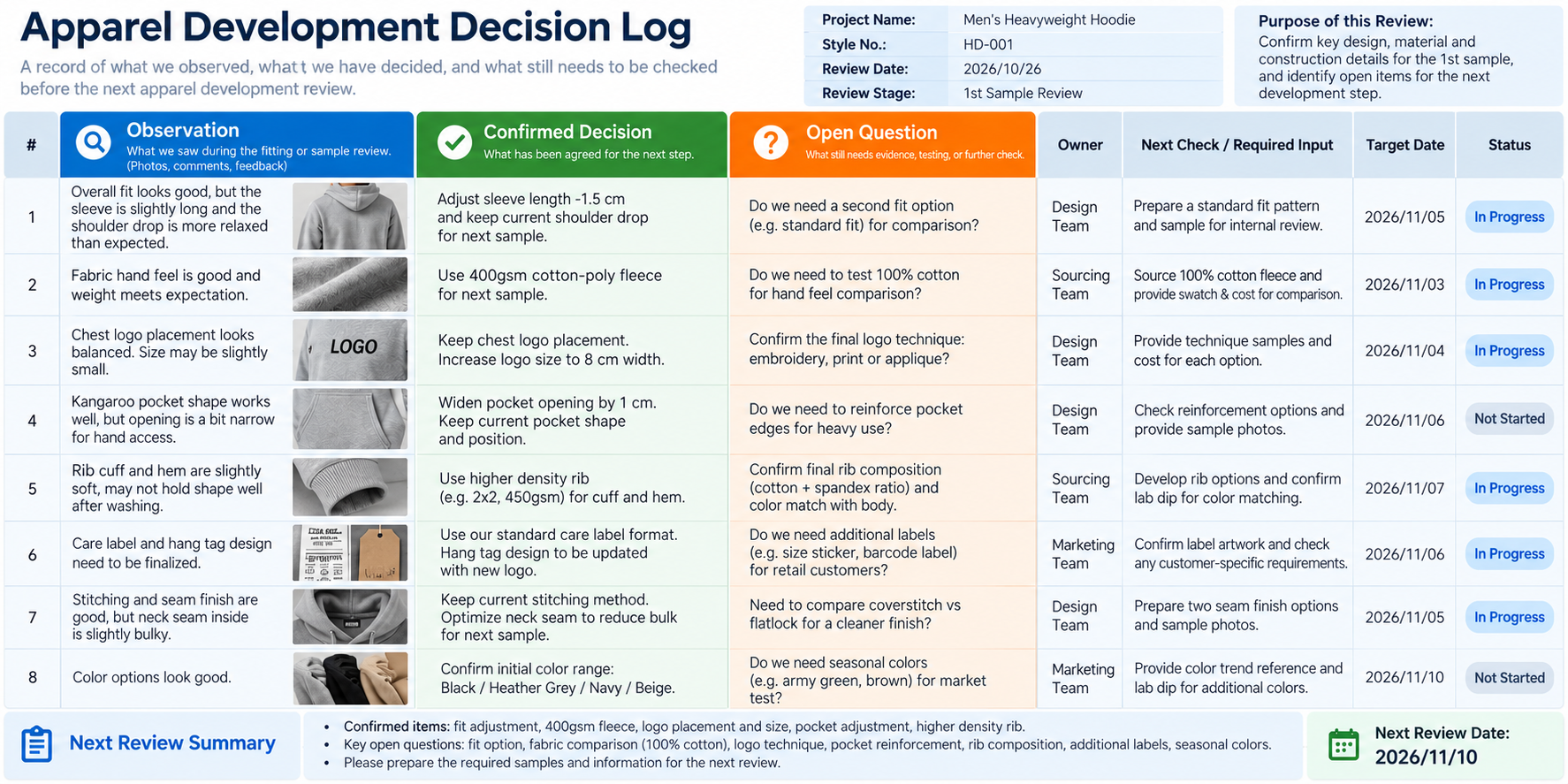
Observation: What the team saw during the fitting or sample review.
Confirmed Decision: What has been explicitly agreed upon for the next step.
Open Question: What still needs evidence, testing, or a second check.
Do not fill gaps with technical or commercial claims that have not been verified. A decision log should not state material composition, product performance, certification, MOQ, pricing, or factory capability unless the current project has approved evidence for that exact statement. Where additional information is needed, write the question and the evidence required. A transparent open item is more useful than a confident-sounding line that cannot be supported later.
Assign a next check to each open item
An open question becomes actionable when the log names the next check. For each unresolved item, identify what needs to be clarified, who is responsible for checking it, and what input would allow the team to decide. Keep the owner role-focused rather than inventing a promise about how quickly an answer will arrive.
This sequence also keeps development work separate from terms that need their own approval. A discussion about product direction, sampling, or construction can move forward with a clear question list. Commercial subjects such as pricing, quantities, payment, and delivery should remain marked for separate confirmation. This lets the team build a useful development record without suggesting that an early review has settled all commercial or operational conditions.
Keep references traceable and permission-aware
Reference images, sketches, and links can clarify a direction, but a decision log should say what each reference is being used to explain. It might show a silhouette, a mood, a placement idea, or a question for a sample review. It does not automatically confirm the right to reproduce another party’s design or image. Add a source or rights note where available, and remove or replace material that cannot be shared for the next review.
The same care applies to information copied from an online product card or catalogue. Keep the log connected to evidence that the team can identify and review. This makes the next handoff clearer and protects the project from accidental overstatement.
End with a focused request for the next review
Close the log with a compact next-step summary: the confirmed direction, the two or three open questions that matter most, the input needed, and the requested review. The aim is to make the next discussion easier to prepare for, not to make the document look complete.
When you have a concise record of the project context and the questions that remain, it can support a more focused development conversation during your Factory visits or remote syncs.
Next Steps: Meet Us at the Canton Fair or Visit Our Factory
If you have a concise record of what is confirmed, what remains open, and what input is needed next, bring it to our team.
Attending the Canton Fair? Let’s schedule a face-to-face meeting at the exhibition to discuss your apparel lines, review tech packs, and look at physical samples together.
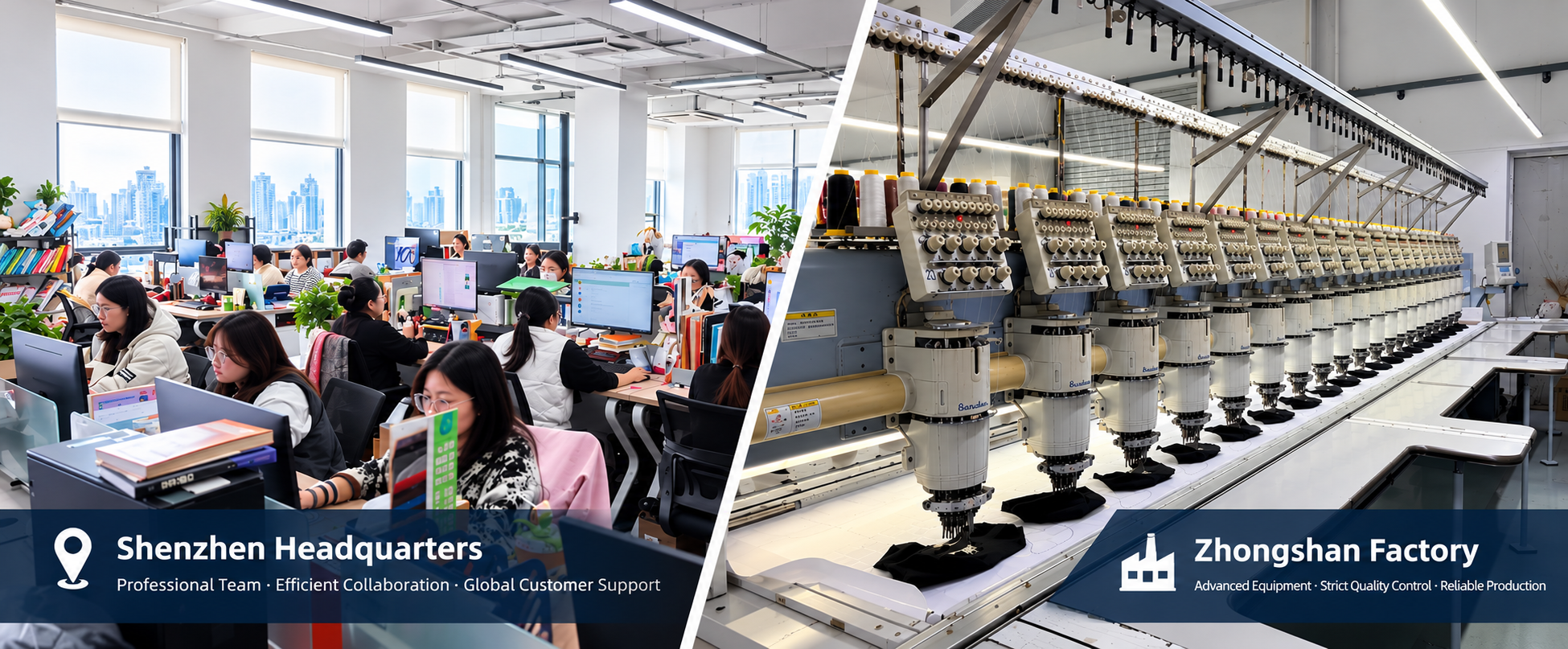
Planning a Factory Tour? Our head office is based in Shenzhen, and our direct manufacturing factory is located in Zhongshan. We welcome brand partners and buyers to visit our facilities for a deeper look at our production capabilities.