

Define the fit decision before the first review
A sample review becomes confusing when the team starts with comments such as too loose or not right without agreeing on the product's intended fit. Before the fitting session, write a short statement describing the wearer, the product category, the intended appearance, and the movement or styling context that matters to the project. A relaxed everyday tee, a fitted layering piece, and a warm-up garment can require different judgments even if they share a nominal size. The fit statement does not establish final measurements; it gives reviewers a common question to answer and makes disagreement visible early.
List the decisions the sample must support. The team may need to decide whether the overall silhouette is on direction, whether a size range needs another trial, or whether a construction detail should be discussed with the development partner. Separate those decisions from material feel, print placement, and price. They are related, but mixing them in one comment can hide the reason for a requested change. Record which style, sample version, and reference document are under review so that later comments are tied to the correct object rather than an image or an informal product nickname.
Create a repeatable observation grid
A useful fit review matrix has one row per observation and a small set of consistent columns. Start with style and sample version, the size shown on the garment, the reviewer or fitting role, the observation area, what was seen, the intended result, and the proposed next action. Add a field for evidence such as a dated photograph or an agreed measurement sheet. Keep objective observations separate from personal preference. For example, a note can describe where a seam sits or how fabric behaves during a specific movement before recommending a change. This makes a comment easier to discuss than a single adjective.
Use the same observation areas each time, but do not turn the grid into a universal specification. Neck opening, shoulder, body length, waist, sleeve, rise, or hem may matter differently across categories. Select the areas relevant to the actual product. If the team lacks an approved fit standard or a confirmed size chart, state that plainly. Do not copy figures from another brand or treat a product-page image as a measurement source. The matrix should show where a decision is needed; it should not silently invent the technical answer.
Connect each sample observation to a style version, an intended result, and dated evidence.
Compare sizes and versions without losing context
A single sample can reveal useful direction, but it cannot automatically validate an entire size range. In the matrix, identify which sizes were actually reviewed and which remain untested. If several sizes are available, make the review method consistent: note the garment version, the fitting conditions, and the reason each size was selected. When reviewers compare photographs, use clear labels so that similar images from different rounds are not confused. A sequence of labeled observations can show whether a change solved the original issue or shifted it to another size or area.
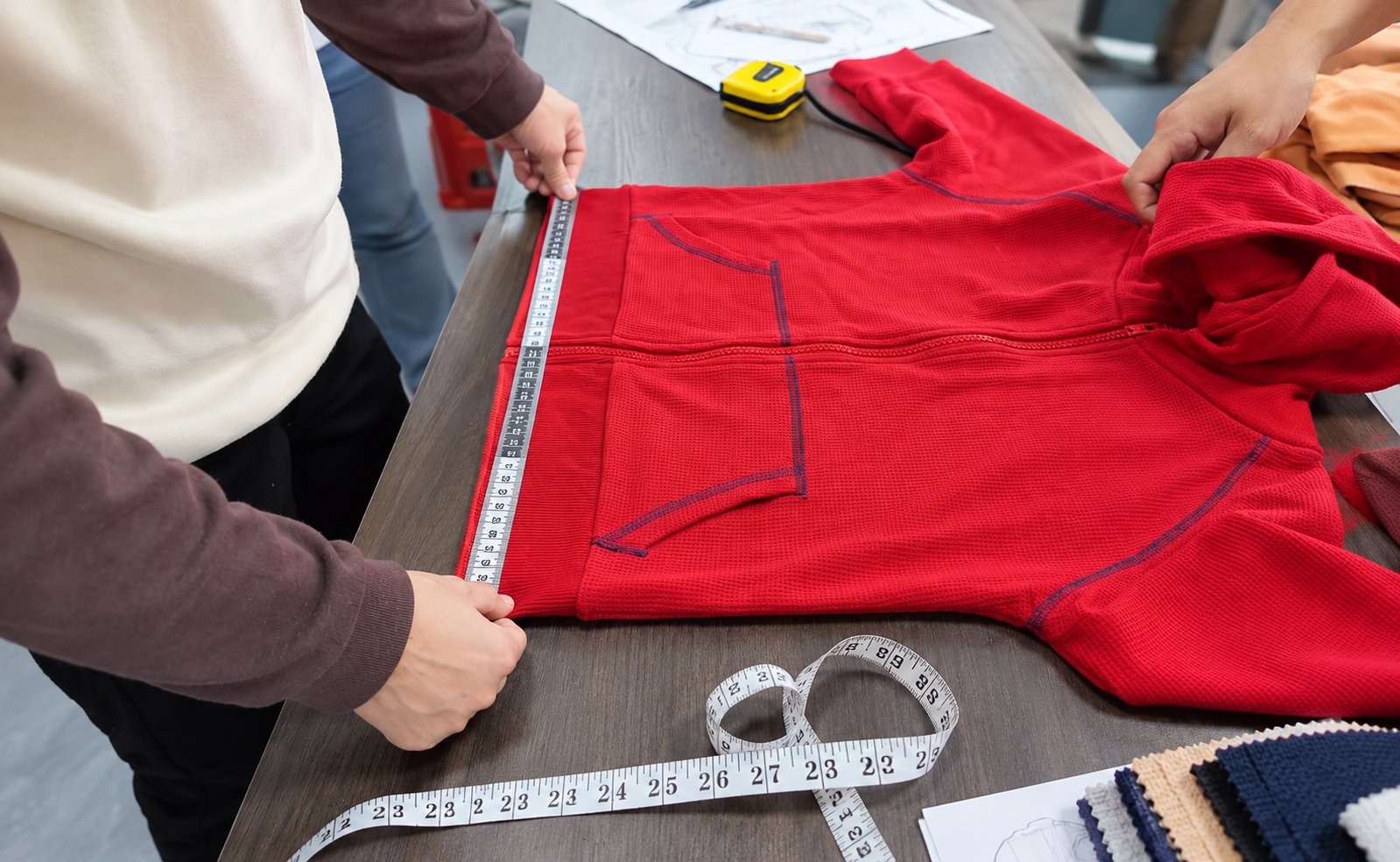
Changes should be tracked as decisions, not just new files. Give each review round a date and a short change summary. Mark an observation as accepted, rejected, requiring another sample, or awaiting a technical answer. Preserve the original comment so the team can see why a revision was requested. This is especially important when several buyers, designers, and a development partner review the same project at different times. A shared record reduces the risk that one person treats an unresolved question as a final instruction.
Translate feedback into a clear development request
When the review is complete, group the observations by the action required. Some comments may need a design decision from the brand. Others may require a pattern or construction discussion, another fitting sample, or a clarification of the intended material. For each action, state the desired outcome and identify who is responsible for the next answer. A development partner should be able to see what the buyer observed, what evidence supports it, and whether the buyer has approved a change or is asking for options. That distinction protects both sides from treating an exploratory question as an approved revision.
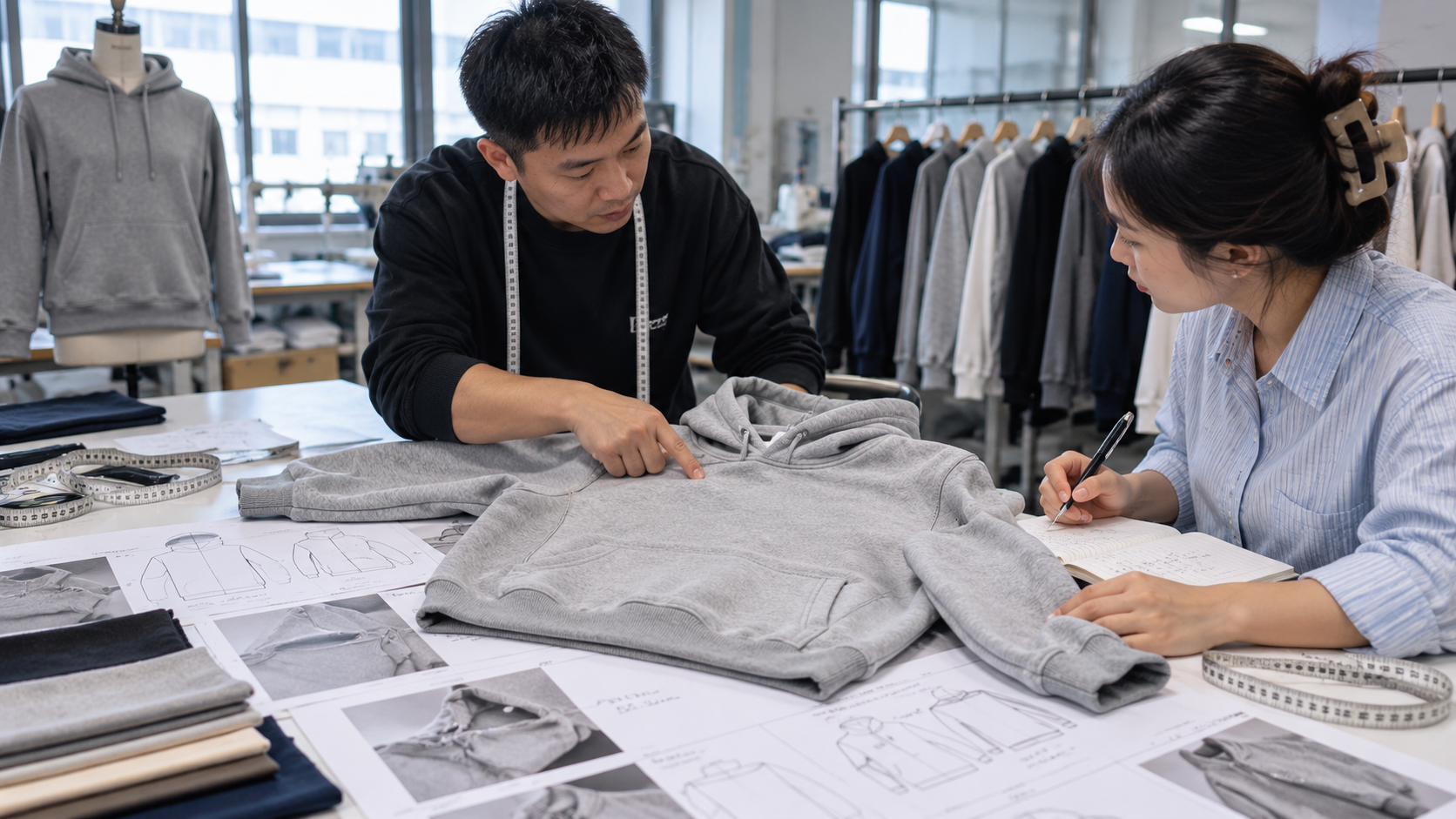
Attach only useful materials to the request: labeled photographs, the relevant version of the product brief, an approved measurement document if one exists, and the matrix itself. Remove unrelated personal or third-party information before sharing. If reference images are included, identify their purpose and rights status rather than assuming they may be copied into a final product. Do not attach a collection of images without annotations. The purpose of the package is to make the next conversation specific enough for the development team to answer, not to overwhelm it with unranked inspiration.
A fit comment becomes actionable when the next decision, owner, and status are explicit.
Use the matrix as a review gate, not a claim of approval
Before closing the review, scan every row for an owner and a status. Confirm which observations became approved instructions, which remain questions, and which were deliberately declined. Make sure the chosen sample version is named on the final record. If the team has not reviewed a size, movement, or material condition, do not mark it approved simply because another part of the sample looks promising. A decision gate is useful precisely because it preserves what has not yet been tested. It also makes the next sample request easier to explain and easier to evaluate against the previous round.

An apparel fit review matrix is a working communication tool, not a substitute for an agreed size specification or a final production approval. Its value is that it turns subjective reactions into traceable observations and clear decisions. Lansen's product-brief guidance offers a starting point for describing product direction before sampling; the fit matrix then gives the team a structured way to record what a sample did and did not answer. With that record in hand, a buyer can discuss the next development step without pretending that open fit questions have already been resolved. For more tailored sportswear solutions, explore our custom OEM/ODM capabilities or check our complete catalog under Products.
Next Step for Your Project & Canton Fair Meeting
If your team has completed a fit review but still has open questions, share the product brief, sample version, and prioritized matrix with Lansen.
Visiting the Canton Fair? Let’s Connect!
If you are attending the recent Canton Fair, we warmly invite you to meet and exchange ideas with us! Our company headquarters is located in Shenzhen, and our direct source manufacturing factory is based in Zhongshan. Whether you want to discuss your project brief or arrange an offline factory visit to our source factory in Zhongshan, we look forward to connecting with you.