
Start with the fit you want to achieve
“Make the sleeves shorter” sounds simple, but it leaves room for different interpretations. For a clothing brand, wholesaler, or schoolwear buyer, a useful T-shirt sleeve length brief explains who will wear the garment, where it will be worn, and how the sleeve should balance with the overall fit.
Begin with one clear objective: for example, compare an upper-arm sleeve with a longer, relaxed sleeve on the same T-shirt body. State whether you are developing a regular-fit training tee, an oversized private label T-shirt, or a coordinated teamwear collection. This gives your OEM/ODM clothing manufacturer a shared direction before measurements are finalized.
Turn visual references into clear instructions
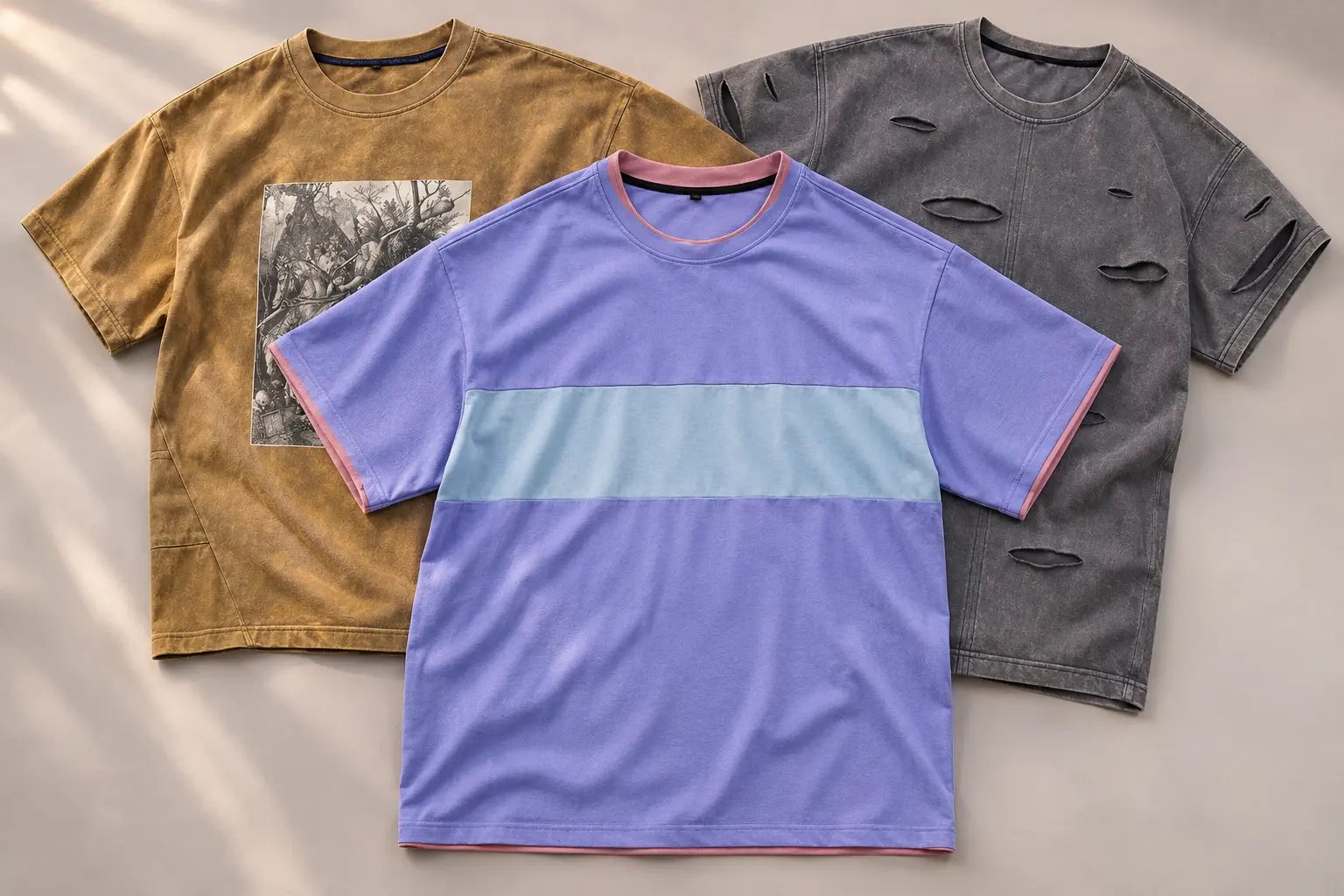
Choose front and side views that show the whole T-shirt. Mark the intended sleeve endpoint, shoulder position, and body length. Our T-shirts and tees collection can help you compare visual directions and prepare questions for your own design.
For an oversized T-shirt sleeve length brief, pay particular attention to the dropped shoulder. Moving the shoulder seam can change where the sleeve ends, even when the sleeve measurement stays the same. Flag raglan sleeves and other shoulder constructions separately so the factory can review the correct pattern direction.
Label each reference with the feature you want to use. If a photo is only for sleeve proportion, say so; its neckline, artwork, fabric, and branding should not become unintended instructions. Use images you have permission to share and keep inspiration separate from approved technical drawings.
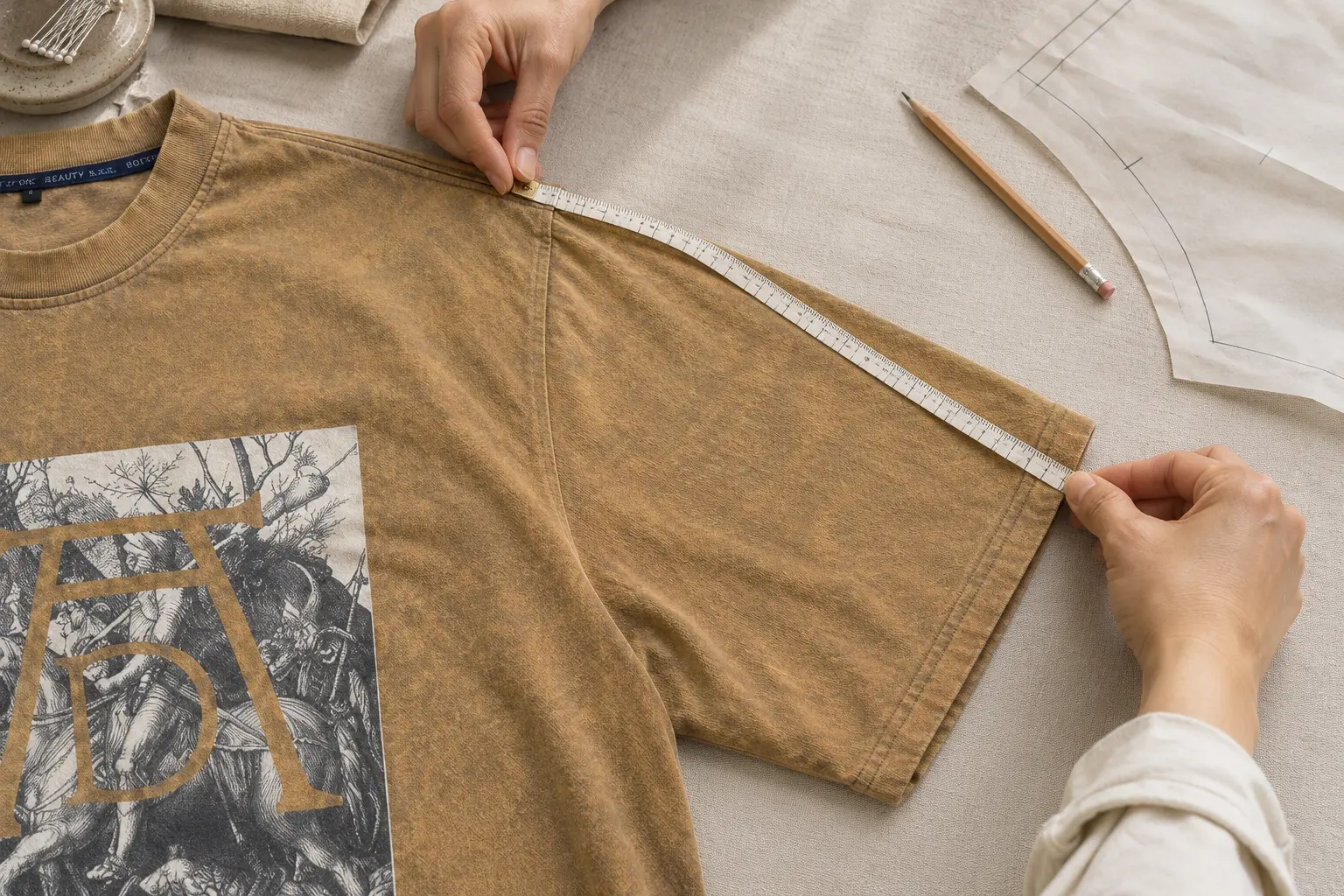
Review the sleeve endpoint, shoulder line, and body proportion together.
Define sleeve requirements for blanks or cut and sew apparel
If you are sourcing heavyweight streetwear blanks, review the existing sleeve shape, dropped shoulder, and sleeve opening before deciding whether the style suits your collection. Specify the fabric weight in GSM and composition you want to assess; “heavyweight” alone does not define the fit or drape.
For cut and sew apparel, document the sleeve silhouette and related pattern requirements in your own design brief. Confirm with your manufacturer whether the requested change involves sleeve length, shoulder placement, sleeve opening, or a combination of adjustments. Review the revised sample in the intended fabric.
What to include in a T-shirt sleeve length brief
During tech pack development, turn your visual references into technical drawings, an agreed measurement chart, construction notes, and artwork placement instructions. A practical custom T-shirt sampling brief should connect the visual goal with information the development team can check:
Target wearer and use: identify the customer group and intended activity or setting.
Fit direction: specify regular, relaxed, or oversized, with an annotated drawing or reference.
Sample size and measurements: identify the base size, sleeve length, and the agreed measuring points.
Related dimensions: review shoulder width, sleeve opening, and body length alongside sleeve length.
Fabric and artwork: identify the planned fabric and any sleeve print, embroidery, or trim that needs clearance.
Review status: date the brief and mark each item as approved, provisional, or still to be confirmed.
Agree with your manufacturer how sleeve length will be measured for the selected construction. A measurement taken from the shoulder seam should not be confused with one taken from another starting point. Include a diagram and confirm any measurement tolerances for the actual project.
If you need help turning a reference into a development brief, discuss your custom T-shirt sampling requirements with Lansen Sports. Share your target fit, sample size, and annotated references so the project discussion can focus on the details that matter.
Review the sample on the intended wearer
Before the fitting, record the sample version, stated size, fabric, and review objective. Take front, side, and back photos in consistent conditions. Check where the sleeve ends with the arms relaxed, then observe how it sits during movements relevant to the garment's intended use.
Make feedback specific. Instead of “the sleeve looks wrong,” describe whether the endpoint is too low, the opening looks too wide, or movement feels restricted. Review sleeve length, shoulder placement, and sleeve opening together before deciding which pattern adjustment to request.
One wearer in one sample size does not establish the fit of the full size range. Record which sizes have been reviewed and agree on any additional fit checks needed for your private label T-shirt development.
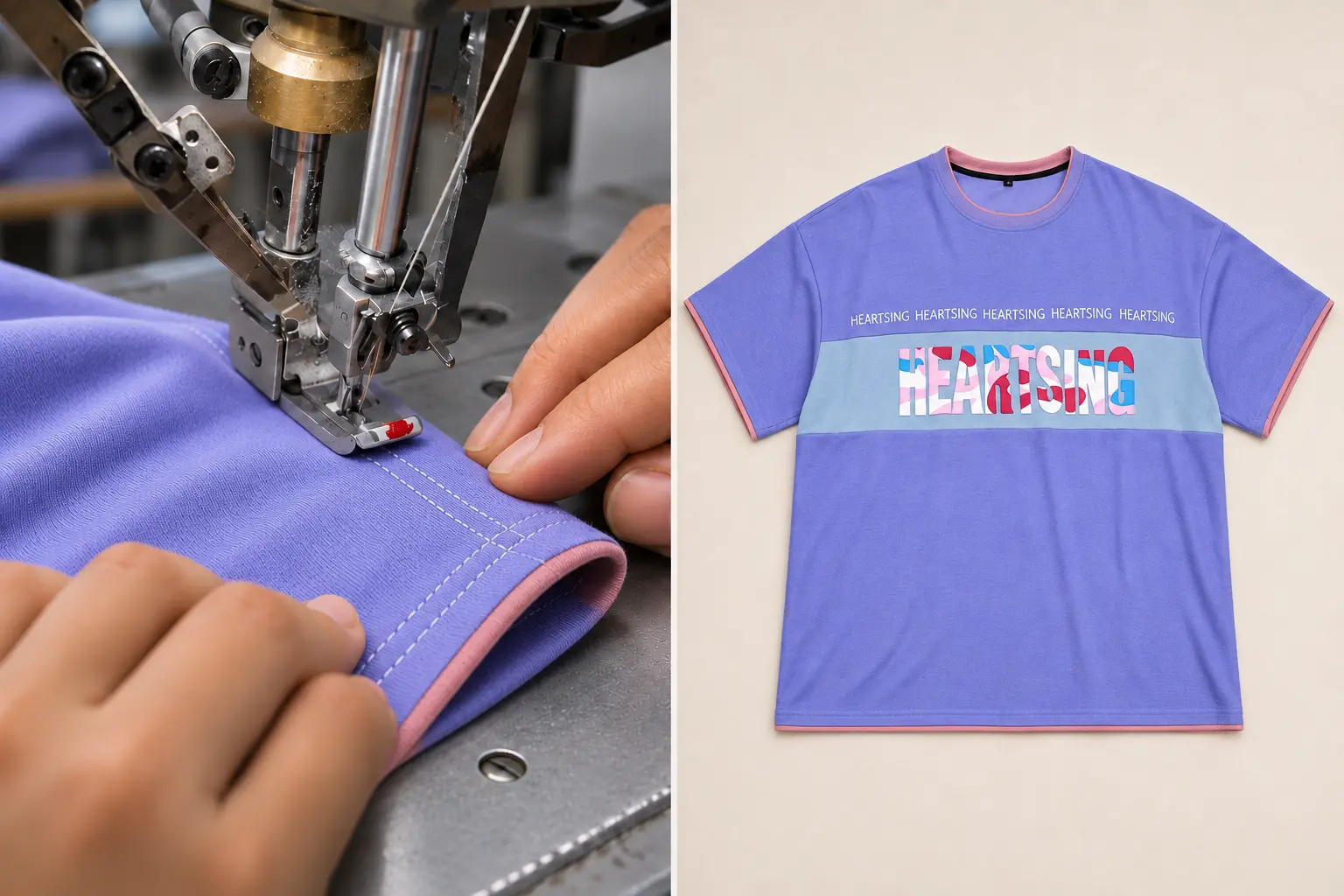
Keep visual feedback, wearer observations, and untested sizes clearly identified.
Approve the sleeve as part of the full garment
Check the selected sleeve direction against the neckline, body length, and chest or sleeve artwork. A proportion that looks balanced on a plain sample may need another review when a logo or embroidery is added. Keep related updates in the same version of the brief.
After the fitting, record the chosen direction, requested changes, reviewer, and date. Distinguish approval of the sleeve proportion from approval of the complete garment. Then choose a clear next step: an annotated pattern revision, a comparison sample, or technical clarification.
For OEM/ODM T-shirt sampling, use the Lansen Sports services overview to frame your project discussion. Confirm fabric, size grading, sample timing, order quantity, pricing, and production requirements for your specific design before moving into bulk production.
FAQ: T-Shirt Sleeve Length and Sampling
How do I choose sleeve length for a custom T-shirt?
Start with the intended wearer, use, and fit direction. Compare the sleeve endpoint with the shoulder position and body length, then review a sample on the intended wearer. There is no single sleeve length that suits every regular-fit, relaxed, or oversized T-shirt.
What should I send a private label T-shirt manufacturer before sampling?
Send an annotated design or reference, your target customer, fit direction, base sample size, measurement diagram, fabric preference, and artwork placement. Identify details that still need the manufacturer's input so they can be resolved during development.
Why does an oversized T-shirt sleeve look longer than expected?
A dropped shoulder places the sleeve seam farther down the arm, which can make the sleeve endpoint sit lower. Review the shoulder width, sleeve measurement, and overall silhouette together before requesting a shorter sleeve.
Can a reference photo replace a T-shirt measurement chart?
A photo helps communicate style and proportion, but it does not provide reliable production measurements. Use it alongside an agreed measurement chart and measuring method, then confirm the result through sample review.
Should sleeve length be checked across different T-shirt sizes?
Yes. Confirm the size grading approach and review plan with your manufacturer. Approval of one base-size sample does not confirm the sleeve proportion or fit of every size in a wholesale T-shirt order.
Can I use the same sleeve specifications for a T-shirt and a custom fleece hoodie?
Use a separate specification and sample review for each garment. A custom fleece hoodie may have different fabric bulk, shoulder placement, sleeve construction, and rib cuffs. Keep the collection’s visual direction consistent, but confirm sleeve measurements and movement on each style.
What should an OEM/ODM clothing manufacturer receive for sleeve development?
Provide the target fit, base size, annotated reference, fabric direction, and agreed measuring points. For custom cut and sew apparel, include the latest tech pack version and identify which sleeve details are approved or still open for review.
Can I visit Lansen Sports to discuss a T-shirt development project?
Yes. Our headquarters are in Shenzhen, and our factory is in Zhongshan. Contact us in advance to arrange a visit and share the styles or sampling questions you would like to discuss.
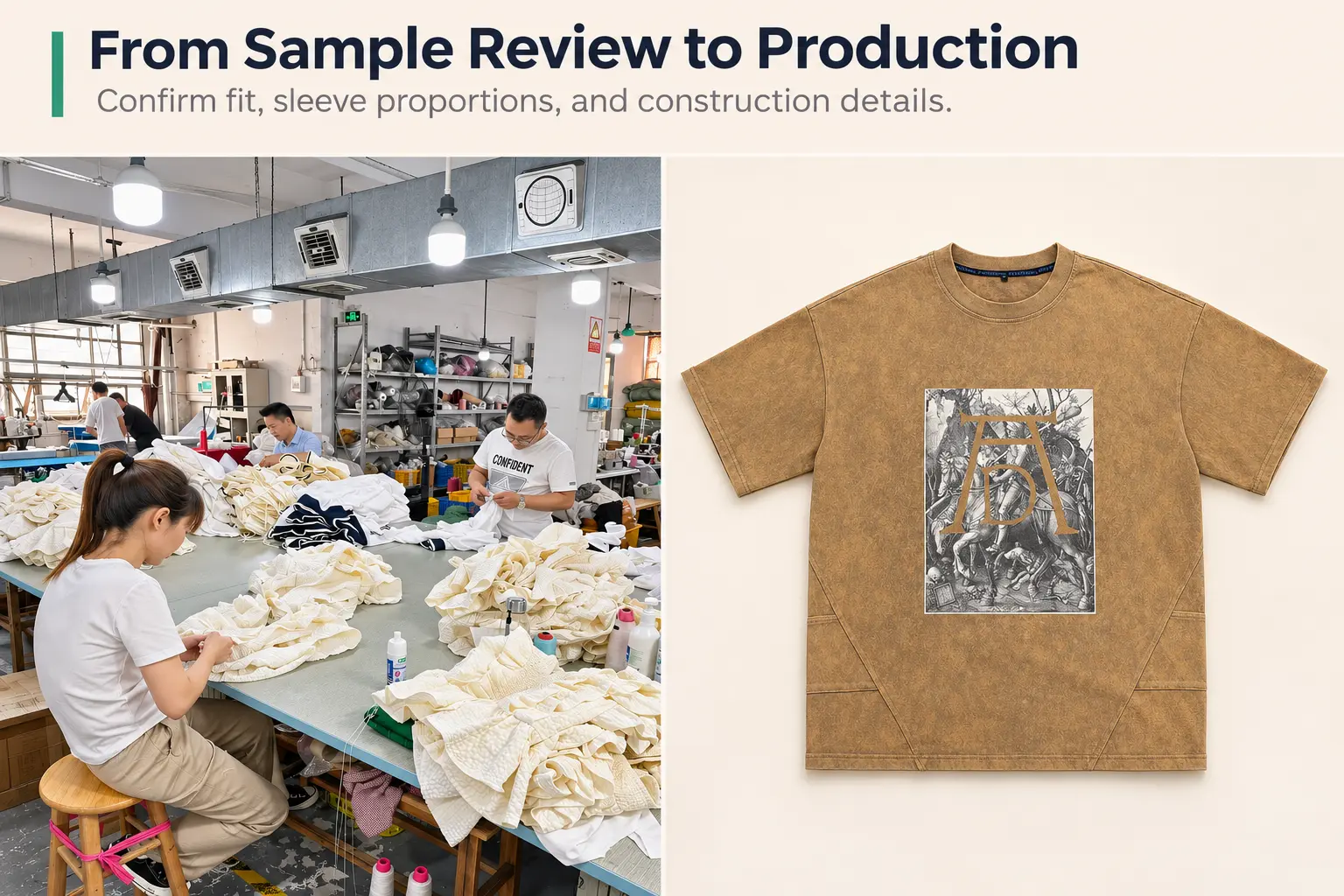
Let's develop your next T-shirt collection
Planning custom T-shirts for your brand, wholesale range, or school team? Contact Lansen Sports to discuss your T-shirt project and share your design, target fit, expected quantity, and sampling requirements. With our headquarters in Shenzhen and our factory in Zhongshan, we welcome you to arrange a visit, meet our team, and discuss your collection in person.