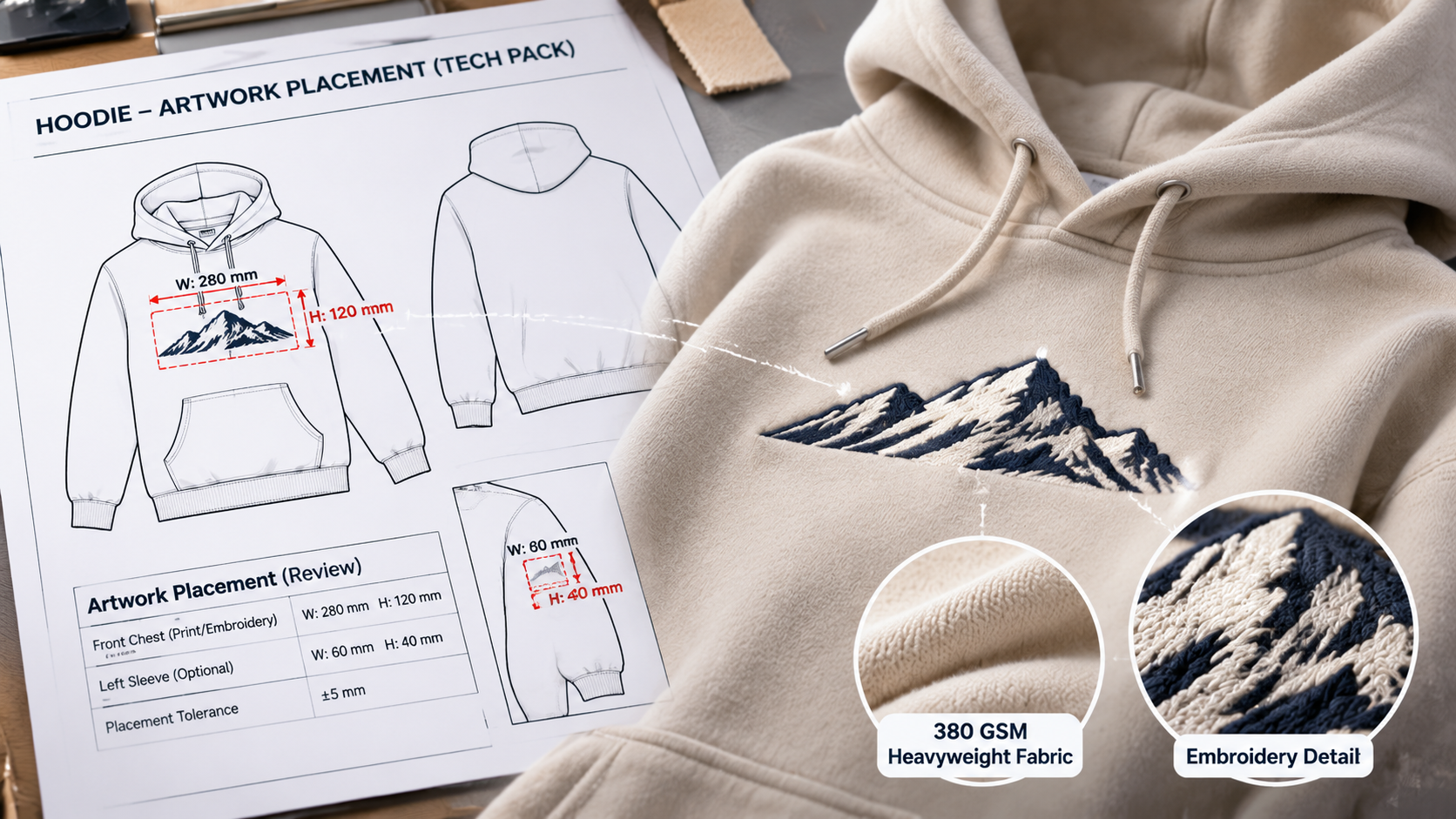
State what the placement review is meant to decide
An artwork placement review works best when it begins with a specific project question. The team may need to compare broad layout directions, decide which area of a garment needs further exploration, or identify what a first sample should help clarify. State that purpose before sharing images or measurements. It gives participants a common frame for the discussion and avoids treating a rough visual as a finished instruction for production.
Describe the garment context that is already known, such as the intended wearer, the planned use, the style direction, or the role of the artwork in the overall concept. Keep unknown details visible. An early review can discuss balance, hierarchy, visual focus, and placement questions without claiming that the artwork, garment, size, print method, or final outcome has been confirmed. This distinction helps a team make progress while preserving the limits of the available project information.
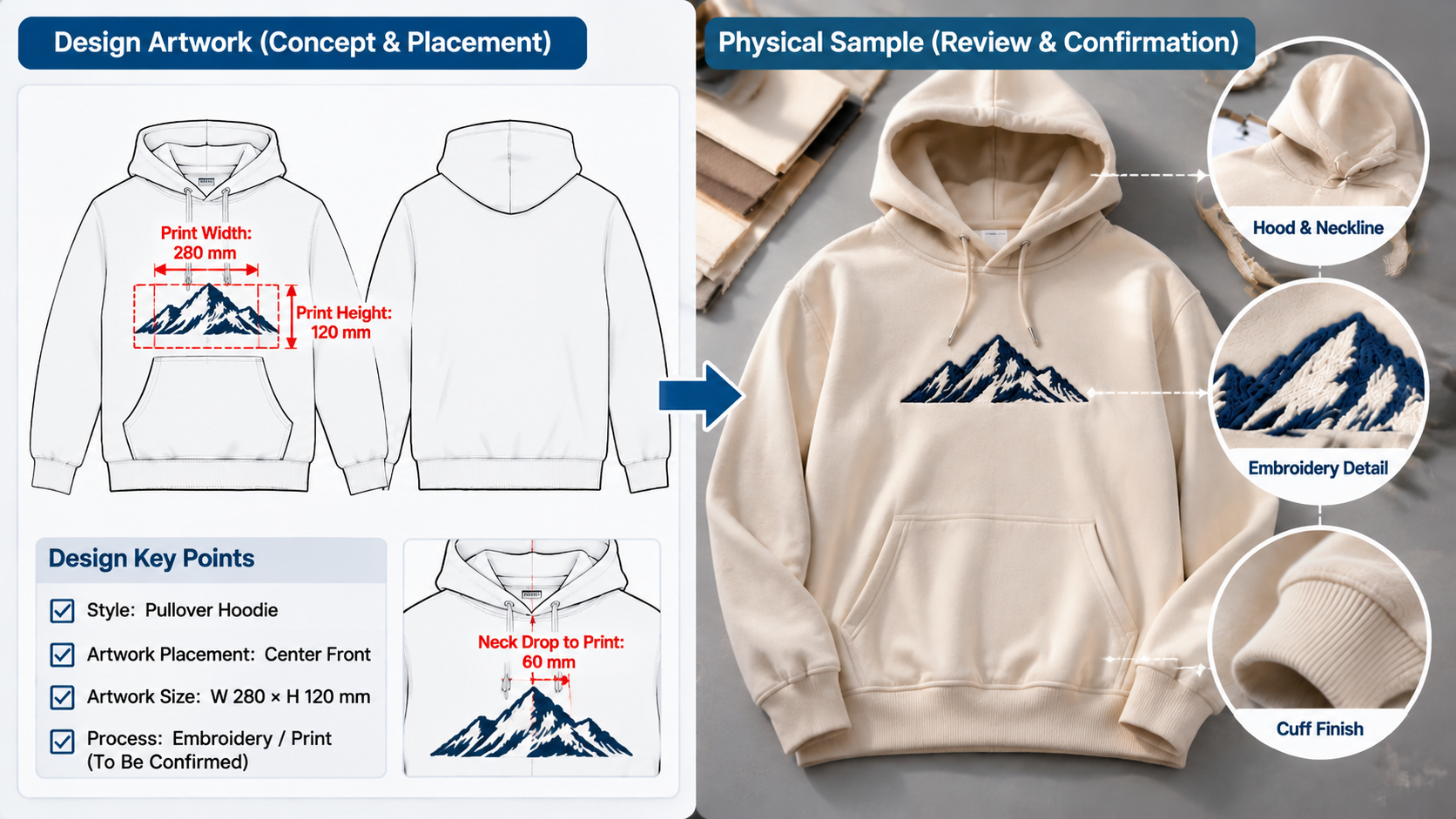
Separate creative reference from approved artwork
Reference images can make a placement question easier to explain, but their role must be clear. A mood image, screenshot, or sketch may illustrate scale, position, contrast, or visual rhythm. It does not automatically grant a right to reproduce artwork or establish an approved project asset. Add a short note that identifies what the reference is meant to show and avoid presenting it as a final artwork file, ownership record, or approved specification.
The existing product brief guidance can help separate shareable reference context from items that need confirmation. If a design file, logo, character, image, or other creative asset has an unclear source or permission status, mark it for review rather than embedding it in a final-looking instruction. Clear labelling protects the discussion from avoidable assumptions and gives the responsible participants a practical list of questions to resolve before an asset becomes part of a project record.
Use project purpose and shareable visual context to define what the placement review should clarify.
Ask placement questions that support a sample decision
A useful agenda asks how a placement choice relates to the decision the team needs to make. Questions can address which garment area should be reviewed, what relationship should be examined between artwork and construction features, or what a sample needs to show before a direction is selected. Group questions by the decision they support. This is more useful than a collection of unexplained dimensions because a reviewer can see what the note is trying to clarify.
Use conditional language where the answer is not approved. Do not infer the final size, colour outcome, print method, durability, material compatibility, or commercial availability from an early layout. Those topics may require different evidence, current specifications, permissions, or commercial confirmation. Record them as separate items if they matter to the project. This keeps the creative review focused without turning an exploratory placement question into a technical or commercial claim.
Keep observations, choices, and confirmations distinct
During the review, record observations separately from choices. An observation might note that a visual element appears crowded, that balance needs comparison, or that a placement point should be checked against the garment shape. A choice should state only what the responsible participants have decided to explore next. If evidence is missing, write it as an open confirmation item instead of filling the gap with a presumed artwork rule or product outcome.
This small structure makes a later handoff more reliable. It shows which reference context may be carried forward, which questions still need a decision, and which items require rights, technical, or commercial confirmation. It also helps prevent informal annotations from being mistaken for a final order instruction. A concise record can support several review rounds without requiring the team to recreate the original purpose of each image or comment.
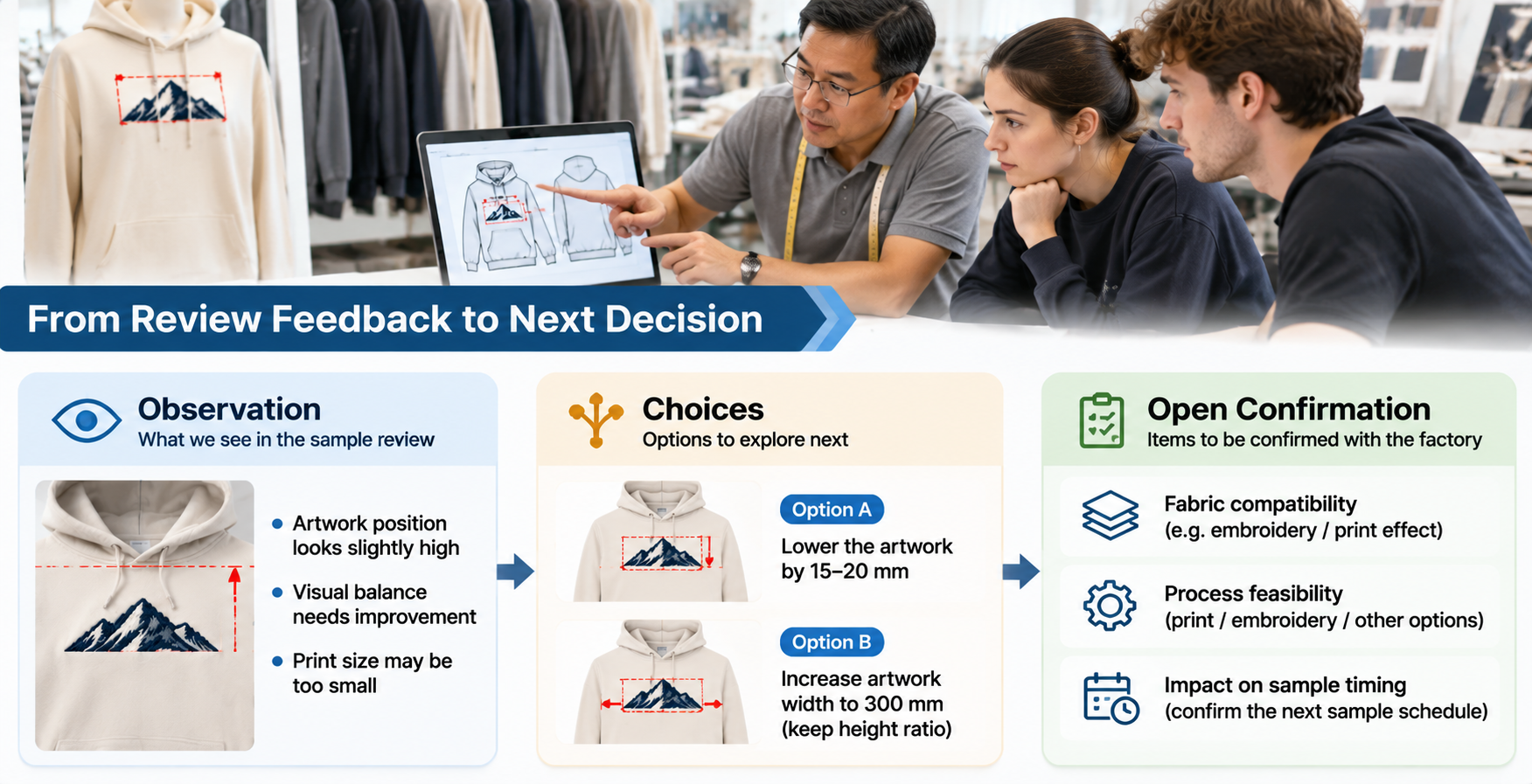
Keep observations, choices, and confirmation items distinct in the next review handoff.
Create a focused handoff for the next conversation
Before sharing the review pack, include the project purpose, the specific placement questions, the references that may be used, and the items still requiring confirmation. Ask for the next decision rather than a blanket assurance. This gives the next participant enough context to respond usefully while making clear that unverified design, rights, technical, and commercial items remain separate from the current discussion.
If you are organising a development and sampling conversation, the services overview can help frame the type of project discussion you want to begin. Bring shareable context, keep the boundaries explicit, and use the review to identify the next question. That approach supports a productive artwork placement discussion without treating a reference image, early layout, or preliminary sample observation as a final product specification or commercial commitment.
Next step for your project
If you have a clear project purpose, shareable artwork context, and focused placement questions, use that information to begin a practical discussion. Keep unverified specifications, rights questions, and commercial terms marked for separate confirmation before they become part of a project record.
Have an apparel idea?
Share what is decided and what still needs discussion. Our team can review your project brief. Whether you are developing custom hoodies, sweatpants, or activewear, our one-stop manufacturing solution from design development to final QC ensures smooth production.
Planning to source in person? We welcome global brand founders and buyers to visit our headquarters in Shenzhen and our direct-source manufacturing facility in Zhongshan.