
Begin with the garment's intended use
A material comparison becomes more useful when the team first describes the garment it wants to develop. Identify the intended wearer, usage setting, expected range of movement, and season or conditions in which the garment will be worn. A fabric that looks appealing in a photograph may perform differently when made into a finished garment, so the brief should explain the role the material needs to play rather than list a favored name alone.
Write down any constraints already approved by your team, such as the desired hand feel, opacity, stretch direction, care expectation or visual finish. Keep subjective preferences separate from measurable technical requirements. If the desired result has not been tested, describe it as a question for development rather than a performance promise.
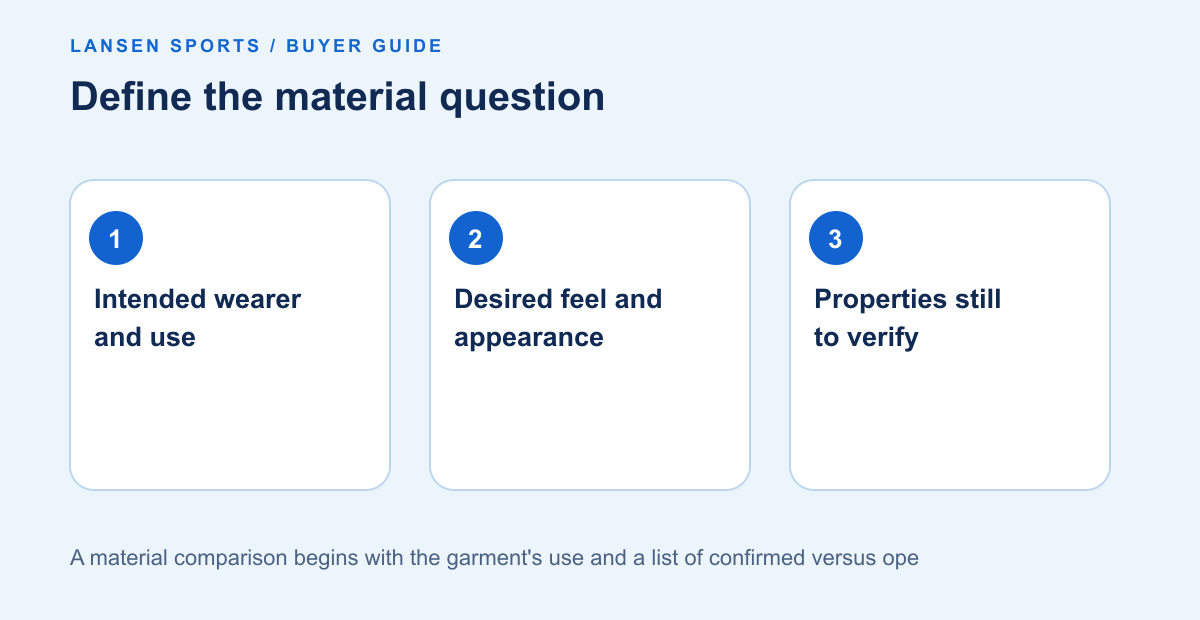
A material comparison begins with the garment's use and a list of confirmed versus open requirements.
Compare options using the same questions
For each candidate material, record the available description, sample source and the information that still needs confirmation. Compare the options using the same criteria: how each fabric supports the intended silhouette, how it feels, how it behaves during garment construction, and how it performs in a sample garment. A side-by-side table can reveal where one option is attractive but poorly documented.
Ask for current specifications and relevant test information when a property matters to the buying decision. Verify that each specification or test report applies to the exact fabric and finish being considered. A certificate or result for a similar fabric should not be carried across without verification. Keep the date and version of each document with the brief.
Use sampling to answer the remaining questions
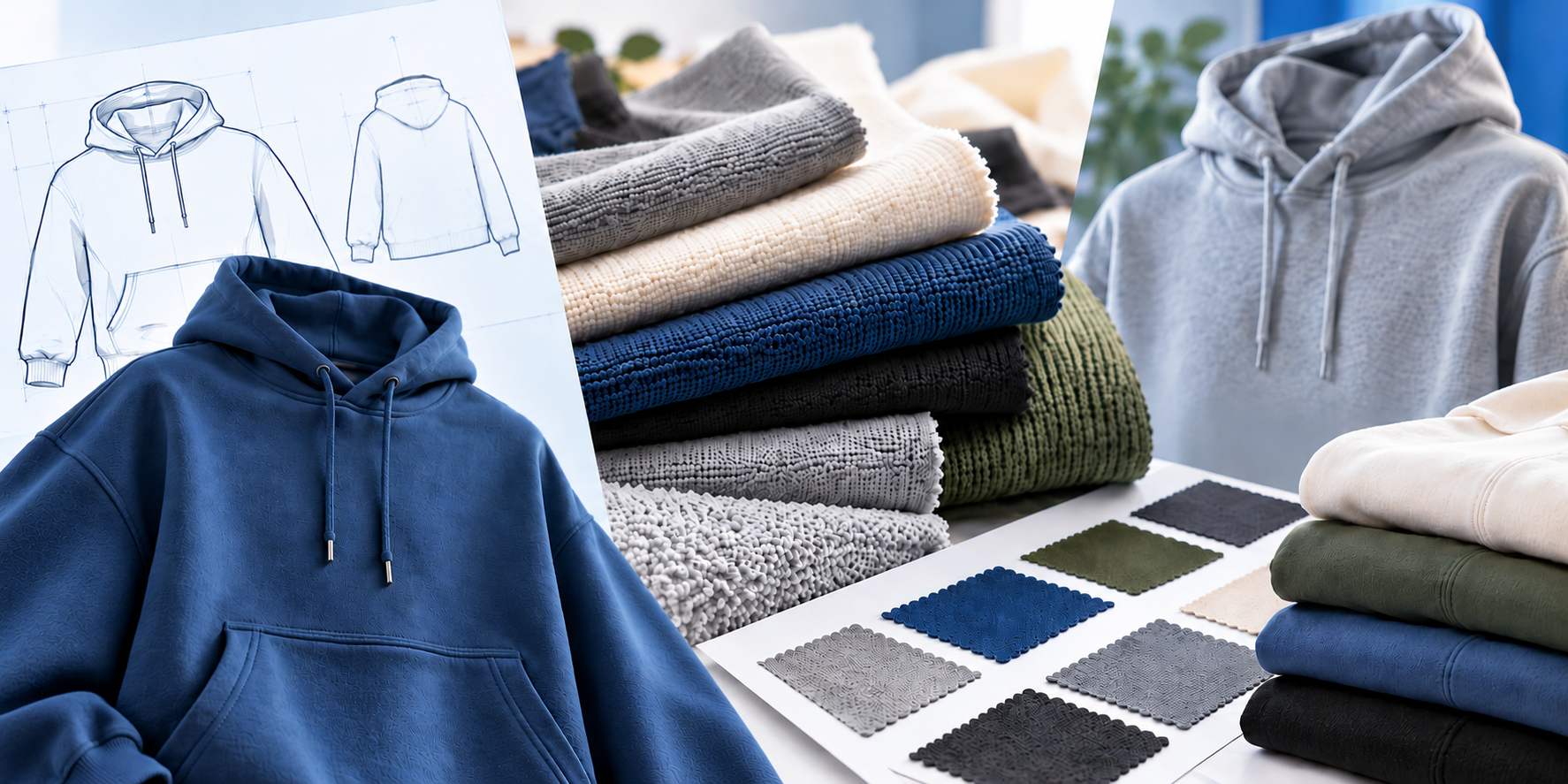
A swatch can help the team examine color, texture and hand feel. A garment sample can reveal additional issues, such as drape, seam appearance, and how the fabric affects the garment's fit. Decide in advance which questions the first sample should answer, and note which conclusions will require a later test or a different construction. This prevents a single attractive swatch from being treated as a complete product decision.
After the review, record the selected direction, the rejected alternatives and the reason for each choice. If the team changes the material, update the product brief and any public claims that depend on it. Pricing, minimum order quantities, lead times, and material availability should be confirmed for the specific project rather than inferred from a general catalog example.
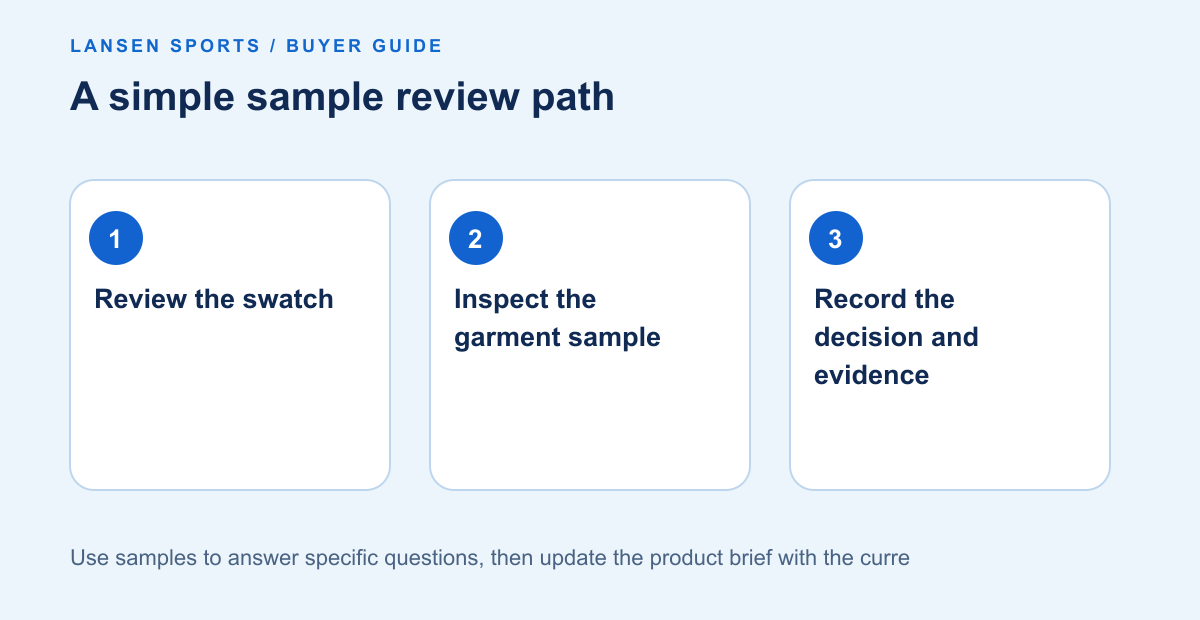
Use samples to answer specific questions, then update the product brief with the current decision.