
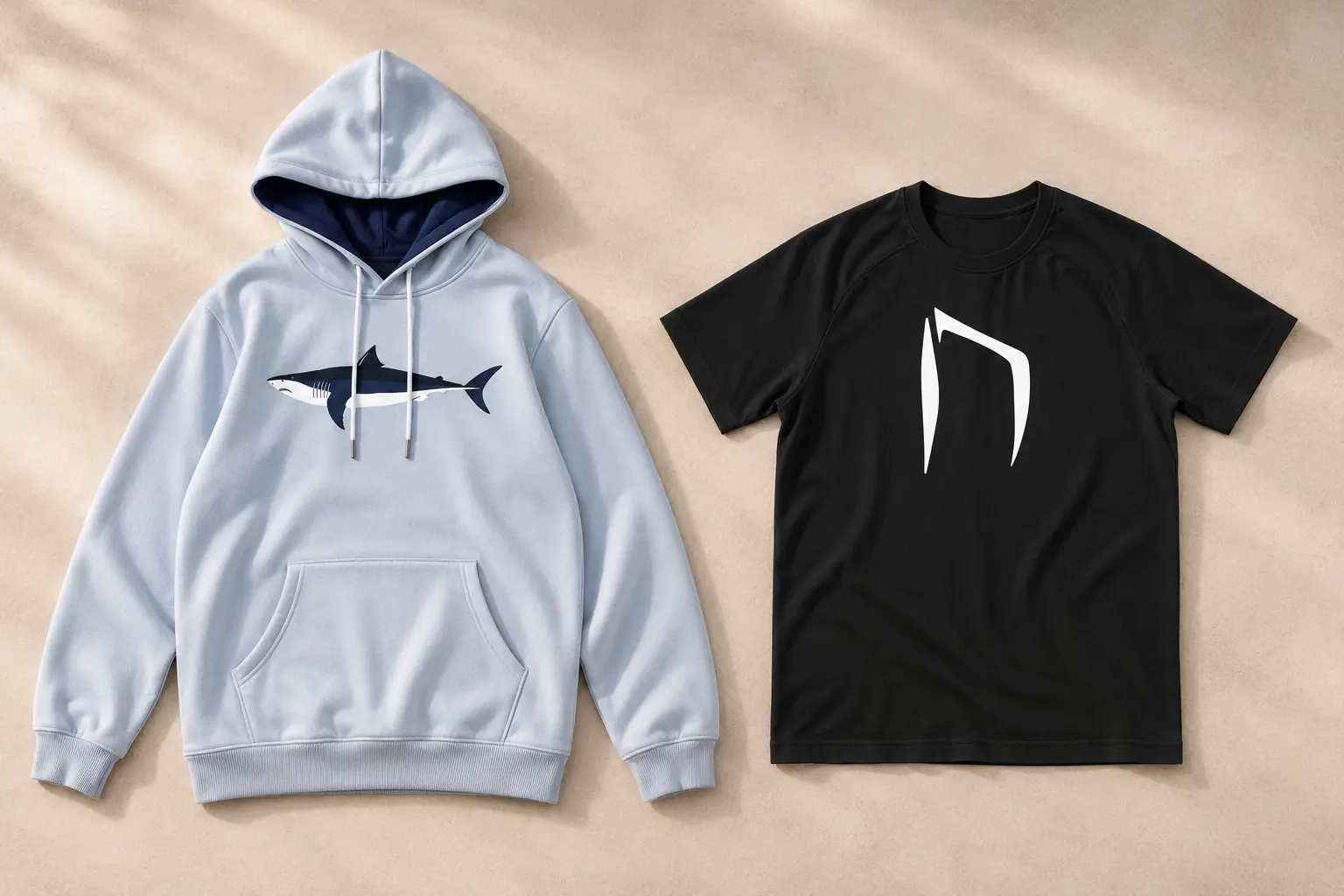
Start with your audience and wear occasion
Choosing between a hoodie and a T-shirt is an early decision in building a branded apparel collection. The right starting point depends on who will wear the garment, when they will wear it, and what role it plays in your range. A school team, a clothing brand, and an event organizer may need very different products—even when they start with the same logo.
Before requesting samples, write down your target wearer, intended season and setting, preferred fit, and design direction. Then decide whether you need one lead product or a coordinated hoodie and T-shirt collection. A focused brief helps your OEM/ODM clothing manufacturer understand the purpose behind the design and gives your team a clear basis for comparison.
When should you start with a T-shirt?
A custom T-shirt is worth exploring for everyday merchandise, event apparel, warm-weather collections, or an item intended to be worn under another layer. Review the actual fabric, weight, fit, and opacity against the intended use. The product name alone does not establish comfort or suitability for an activity.
For private label T-shirt development, define whether you want a regular, relaxed, or oversized silhouette. Check sleeve length, body length, neckline, and artwork scale together. Browse our T-shirt and tee collection to identify styles you would like to discuss, then confirm the specifications for your own project.
When should you start with a hoodie?
A custom hoodie may suit a layering piece, a cooler-weather range, school or team merchandise, or a collection built around a more substantial silhouette. Specify whether you want a pullover or zip-through style, the intended fit, and your preferences for the hood, pockets, cuffs, and hem.
For a custom fleece hoodie, specify the fabric composition, target GSM, and preferred inner surface, such as brushed fleece. Review a swatch and sample to confirm the feel and appearance rather than relying on the style name alone. Those construction choices affect the overall look and the areas available for branding. Review our hoodie and sweatshirt collection for visual references. Fabric composition, weight, finish, and construction should be confirmed through the development brief and sample review.
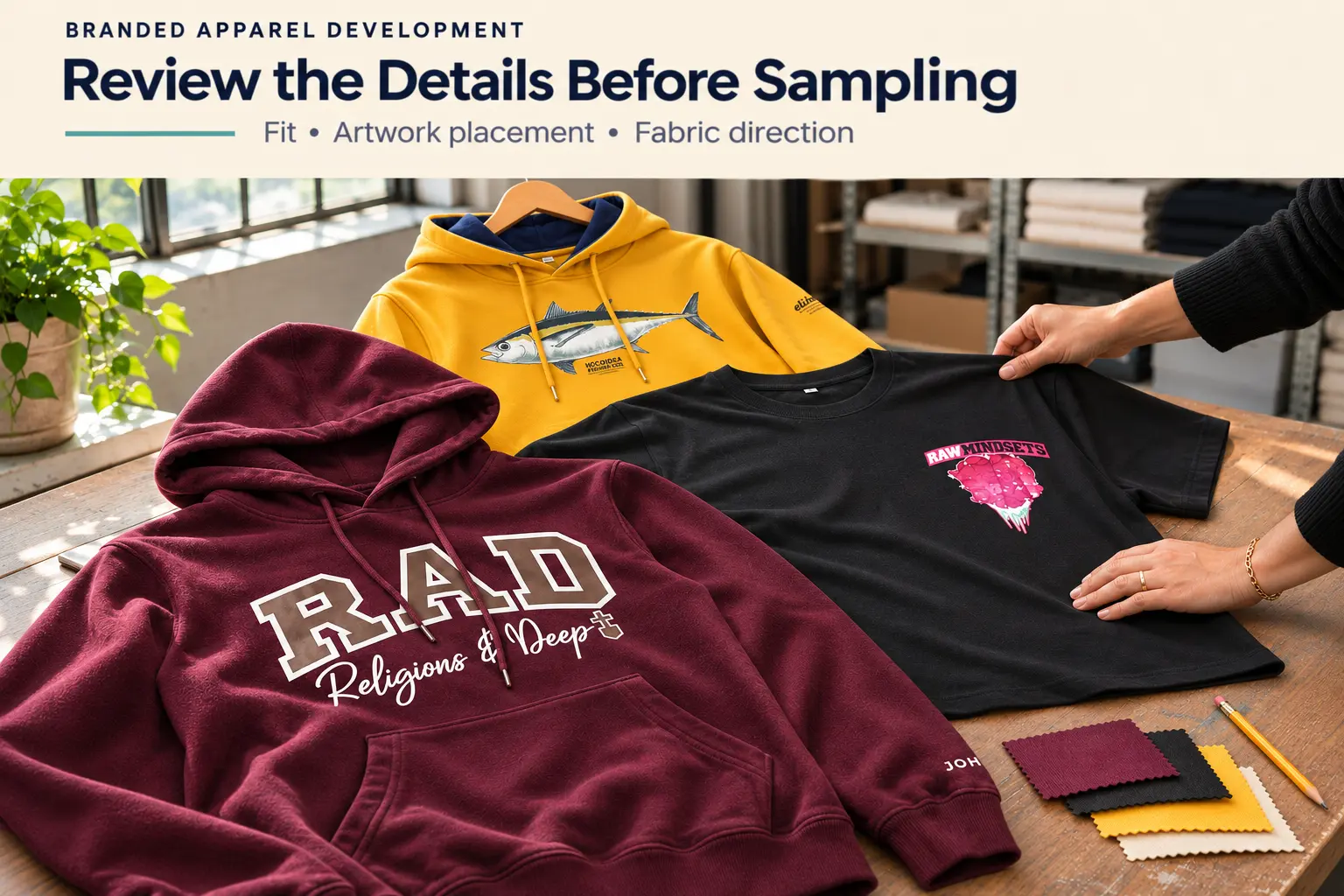
Compare the audience, wear occasion, and role of each garment before choosing your lead style.
Compare the details that affect your collection
For a useful hoodie vs T-shirt comparison for branded merchandise, review the same questions for both options:
Wear occasion: where, when, and how will the customer use the garment?
Fit and sizing: what silhouette and size range does your audience need?
Fabric direction: what feel, weight, and appearance should the sample achieve?
Branding: where will the logo or artwork sit, and how should it look on the garment?
Collection role: is this the main product, a supporting piece, or part of a coordinated set?
Commercial requirements: what order quantity, target budget, and required delivery date should the quotation address?
Compare quotations against a clearly defined specification. Do not assume that one garment type will always have a lower minimum order quantity, shorter sample lead time, or lower total cost. Fabric, decoration, trims, quantities, and packaging all need project-specific confirmation.
Choose between blanks and cut and sew apparel
If your range is built around heavyweight streetwear blanks, define the fabric weight in GSM, composition, fit, and finish you expect. The word “heavyweight” alone is not a complete specification. Review the actual sample for structure, drape, and suitability for your planned decoration.
For cut and sew apparel, the development brief should explain the custom silhouette, panel shapes, measurements, and construction details required for your collection. Compare this route with decorating an existing blank, and ask your manufacturer to confirm fabric options, development steps, minimum quantities, and costs for each approach.
Test your branding on each garment
The same artwork can read differently on a hoodie and a T-shirt. A hoodie pocket, front zip, or hood may affect placement, while a T-shirt's neckline and body proportions can change the visual balance of a chest print. Prepare a mockup for each style rather than simply transferring the artwork at the same size.
Share artwork you have permission to use, identify the intended print or embroidery area, and confirm the proposed decoration method with your manufacturer. Review placement, scale, color, and finish on the actual sample before approval.
If you are comparing custom hoodies and T-shirts for your brand, discuss your branded apparel requirements with Lansen Sports. Share your audience, design references, estimated quantities, and target launch date to give the project discussion a practical starting point.
Keep your first sample range focused
Adding styles also adds decisions about fit, colors, labels, artwork, and packaging. For a first private label apparel collection, choose the variations that answer your most important questions. You might start with one lead garment, or request one hoodie and one T-shirt to compare the same brand direction across two silhouettes.
Record which details are shared across the range and which need separate approval. A common color name does not guarantee a visual match across different fabrics, and an approved print on one garment does not approve the other. Keep a dated specification and review record for each style.
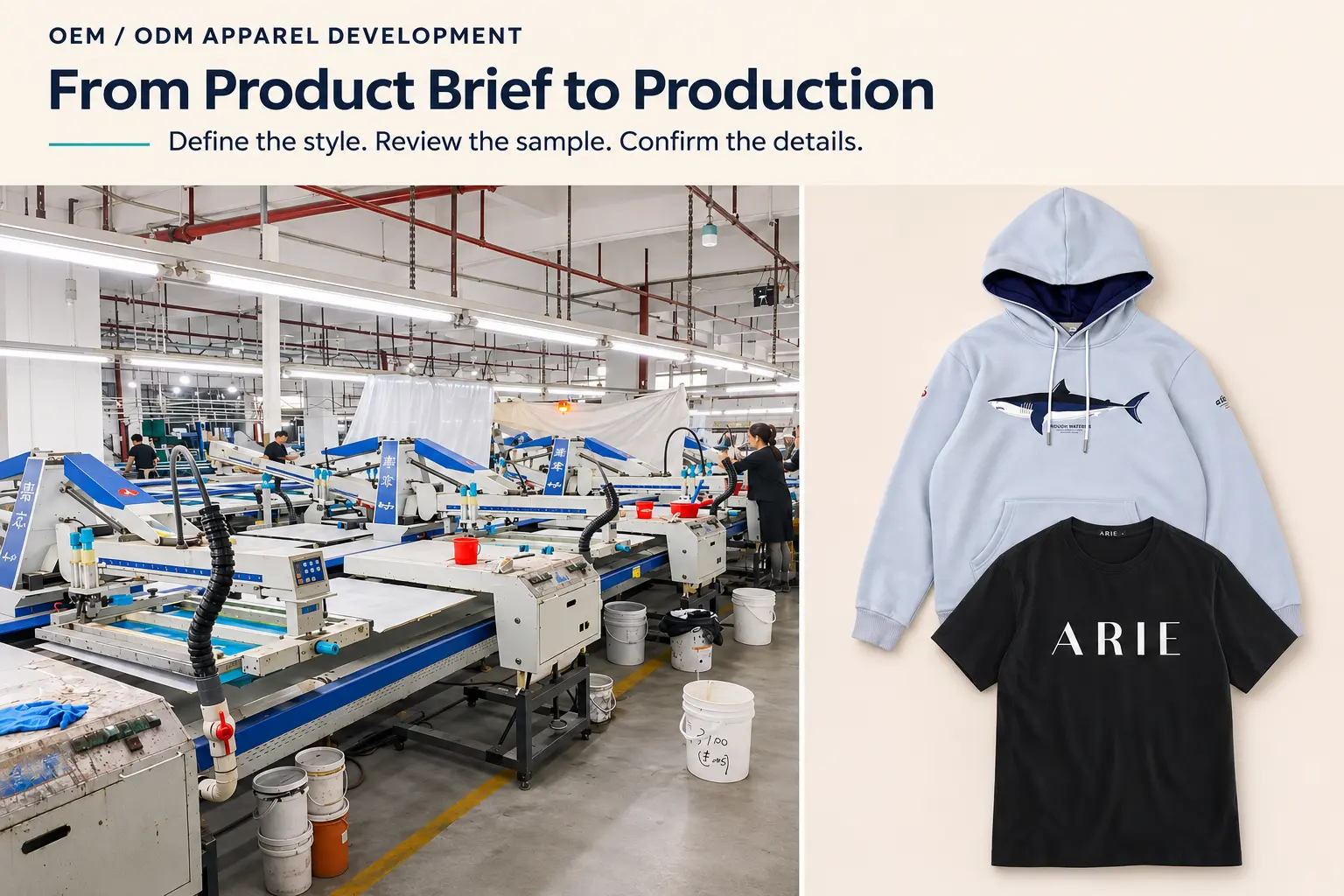
Separate shared collection decisions from the fit, fabric, and artwork checks required for each garment.
Prepare your brief for tech pack development
Include your customer profile, use occasion, preferred garment references, fit direction, fabric preferences, artwork files, size range, estimated quantity, and delivery requirements. For tech pack development, organize these inputs into technical drawings, a measurement chart, construction notes, a materials and trims list, and artwork placement instructions. Add a version date and approval status, and mark open questions clearly so the development team knows where you need guidance.
Use our OEM/ODM services overview to explore the cooperation process, then confirm sample costs, timing, minimum order quantities, and production terms for your design. After reviewing the samples, record the selected direction, requested changes, and remaining approvals before proceeding with a bulk order.
FAQ: Choosing Hoodies or T-Shirts for Your Brand
Should I launch my clothing brand with hoodies or T-shirts?
Start with the product that best fits your audience, wear occasion, and collection identity. If both are important, compare a focused sample of each before expanding into more colors and styles.
Can I use the same logo on custom hoodies and T-shirts?
Yes, the same core logo can be considered for both. Review its scale, placement, and decoration method separately on each garment, especially around pockets, zips, necklines, and seams. Confirm the result through sample approval.
What information is needed for a private label hoodie or T-shirt quotation?
Provide the style or design reference, fabric preferences, decoration details, size range, quantity by style and color, label and packaging requirements, and delivery destination. Identify any details you still need help developing.
What is the minimum order quantity for custom branded apparel?
Request a project-specific MOQ from the manufacturer. The applicable quantity can depend on the style, fabric, color, decoration, and customization requirements. Confirm it before finalizing your range plan.
Should I approve samples before placing a wholesale apparel order?
Sample review helps you check fit, fabric, construction, artwork, and labels against your brief. Agree on the required approval stages with your manufacturer and record any outstanding changes before authorizing production.
What should I confirm with an OEM/ODM clothing manufacturer?
Confirm whether you need existing blanks, design development support, or fully custom cut and sew apparel. Share your specifications and ask for written confirmation of fabric availability, sampling stages, MOQ, pricing, and production timing for the project.
Do heavyweight streetwear blanks and a custom fleece hoodie need different briefs?
Yes. For blanks, identify the existing style and verify its fabric weight, fit, size range, and decoration suitability. For a custom fleece hoodie, also document the pattern direction, hood, pockets, rib trims, and construction details. Agree on which items require new development before sampling.
Can I visit Lansen Sports to discuss my collection?
Our headquarters are in Shenzhen, and our factory is in Zhongshan. Contact us in advance to arrange a visit and let us know which hoodie, T-shirt, or OEM/ODM development questions you would like to discuss.
Let's plan your branded apparel collection
Developing custom hoodies, private label T-shirts, or a coordinated wholesale apparel range? Contact Lansen Sports to discuss your collection and share your ideas, target customers, and order requirements. Our headquarters are in Shenzhen, with our factory in Zhongshan, and we welcome you to arrange a visit, see our operations, and discuss your project in person.