
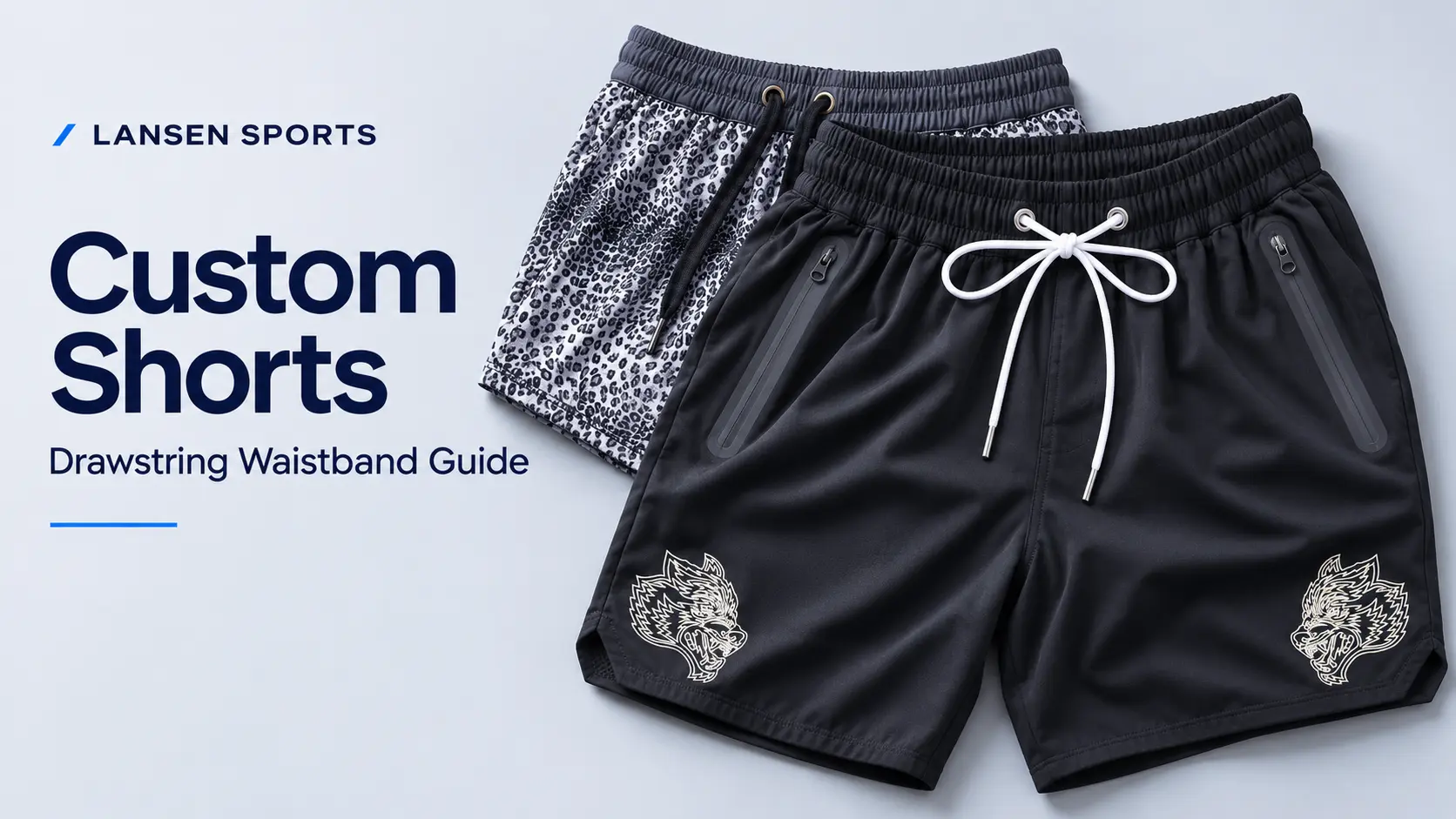
Start with a clear sampling goal
An elastic waistband with a drawstring may sound like a simple request, but it leaves important questions unanswered. How should the waistband look? Who will wear the shorts, and in what setting? What should the first sample help your team decide?
For clothing brands, wholesalers, and teamwear buyers, a clear brief gives designers, buying teams, and manufacturers a shared starting point. Define whether the review will focus on appearance, fit, ease of adjustment, or a comparison between two design options. For example: “Does this waistband suit our casual shorts silhouette, and can the intended wearer adjust it comfortably?”
Name the reviewers and the evidence they need. A designer may assess proportion and cord visibility, while a fit reviewer checks the sample on a wearer. Record these as separate review points so that visual approval is not confused with approval of fit or function.
Show the whole waistband, not just the cord
Use a front view and, where helpful, side and back views to show how the waistband sits within the overall design. Annotate the drawstring opening, visible cord length, preferred cord-end appearance, and nearby pockets, panels, or artwork. A close-up can explain a finish preference; a full garment view shows how that detail works with the silhouette.
Explore the casual shorts collection for visual direction, then identify exactly what matters in each reference. You might highlight a discreet drawstring, a more prominent waist detail, or the balance between the waistband and pocket openings. Confirm the construction and material options for your own project rather than treating a catalog image as a finished specification.
Keep inspiration separate from approved artwork and technical instructions. Use your own or authorized brand assets, and label reference images clearly to avoid ambiguity during development.
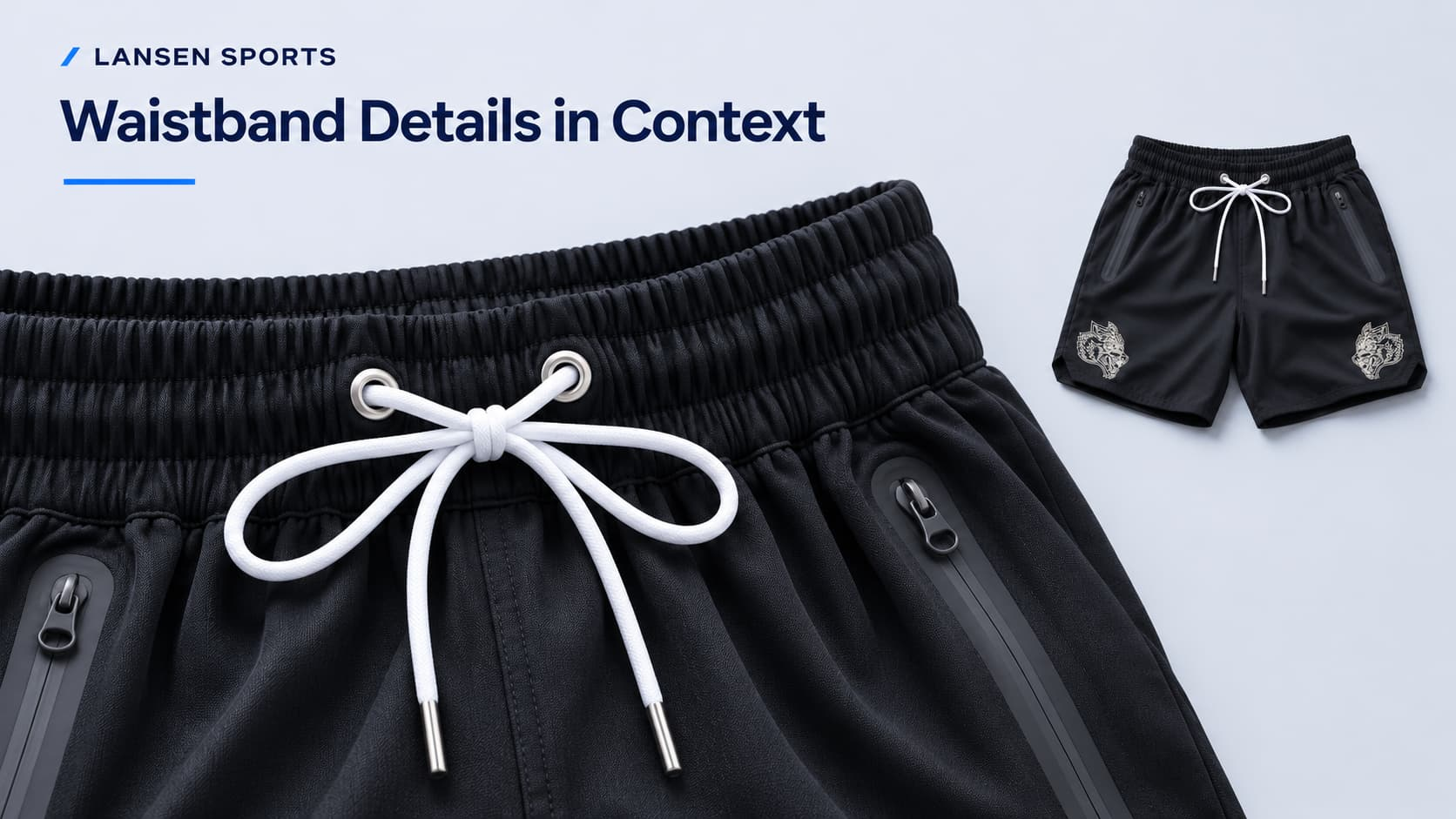
Connect wearer use, drawstring presentation, and surrounding garment details before sampling.
Review appearance, fit, and adjustment separately
Plan a sample review around the intended use of the shorts. Observe the waistband while the wearer is standing and moving, and check whether the drawstring is easy to reach and adjust. Note any pressure, slipping, or awkward access reported during the review, together with the sample size and version.
Organize feedback into three practical questions:
Appearance: Does the waistband proportion and drawstring visibility suit the design?
Fit: How does the waist feel on the intended wearer during the agreed review activities?
Adjustment: Can the wearer reach, tighten, and secure the drawstring as intended?
Specific feedback is easier to act on than “improve the waist.” If the cord looks too prominent, describe the visual change needed. If adjustment feels difficult, flag it for a construction or fit review. Record additional sizes or wearers that still need assessment; one sample does not establish fit across the full size range or prove long-term durability.
Keep the waistband connected to the full design
Review the waistband alongside rise, pocket placement, side panels, graphics, and the intended fit. A change to one area may affect the others. For example, revised pocket placement may change access around the waist, while a different rise may require another fit review.
Keep these details in one dated brief. For multiple sizes or colorways, specify which decisions apply across the range and which need further checking. This helps prevent an approval for one sample from being applied too broadly.
The OEM/ODM services overview provides a starting point for your development discussion. Confirm available materials, construction details, sample timing, and pricing in writing for the specific project, and keep the response with the relevant brief version.
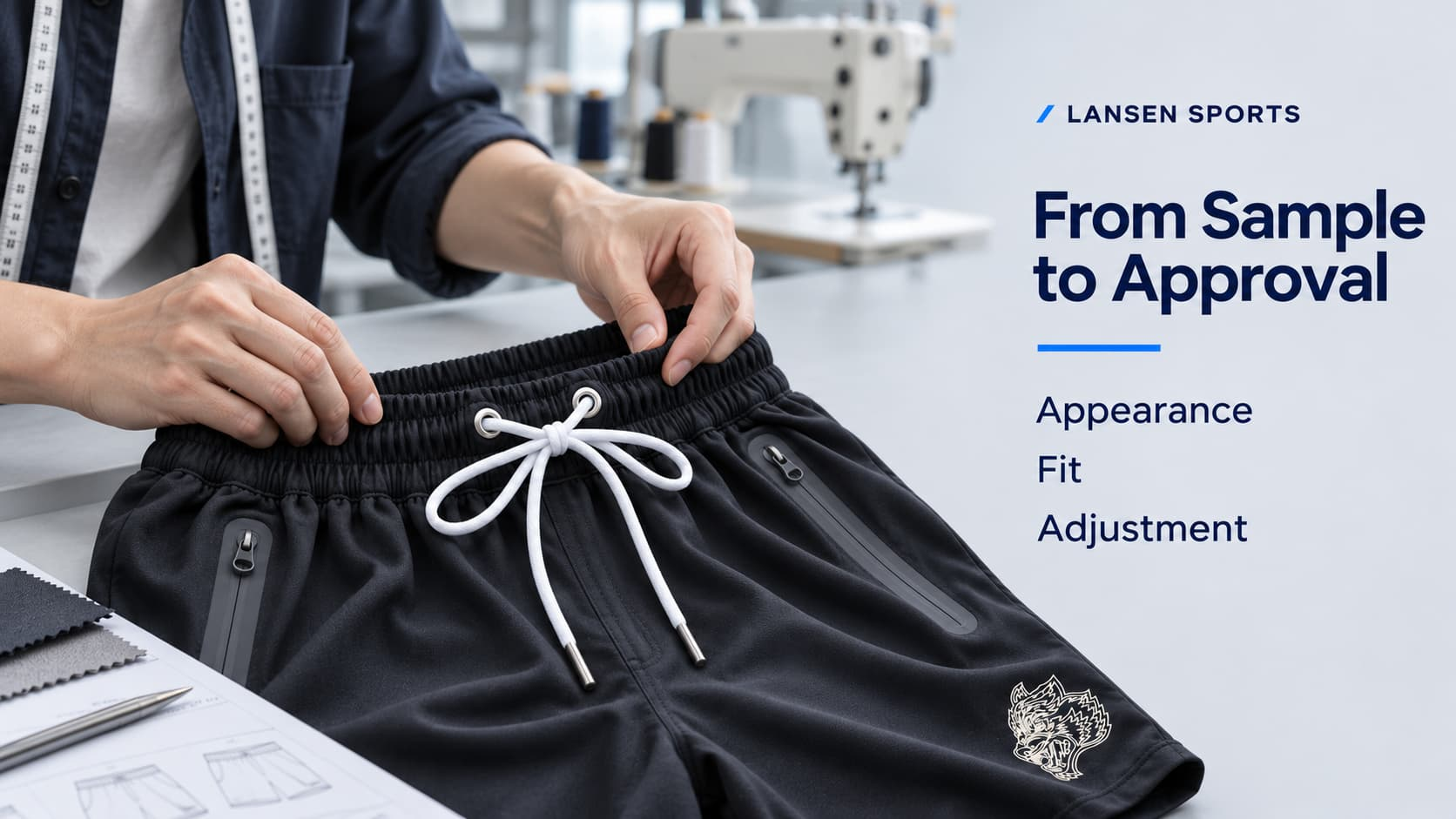
Record appearance, adjustment, and unresolved fit questions separately to make revisions clear.
Turn sample feedback into a clear approval record
After the review, record the selected direction, the sample version, the approval date, and the person responsible for the decision. State what has been approved and what remains open. “Drawstring appearance approved; waist fit requires another review” is more useful than a general approval that leaves room for interpretation.
Give each revision a clear next step, such as an updated sketch, a revised sample, or confirmation of a construction detail. Keep earlier versions for reference so everyone can trace the decisions behind the current design.
Before moving forward, check that your brief includes the intended wearer and use, annotated waistband references, sample review notes, approved details, and outstanding questions. A well-prepared brief helps your team communicate changes clearly and assess the next sample against agreed expectations.
Discuss your custom shorts brief
Planning custom shorts for your brand, wholesale range, or teamwear collection? Contact Lansen Sports to discuss your custom shorts project. Share your intended use, waistband references, and key sample questions to give the discussion a clear starting point. Construction, fit requirements, timing, and commercial terms can then be reviewed for your specific project.